Description
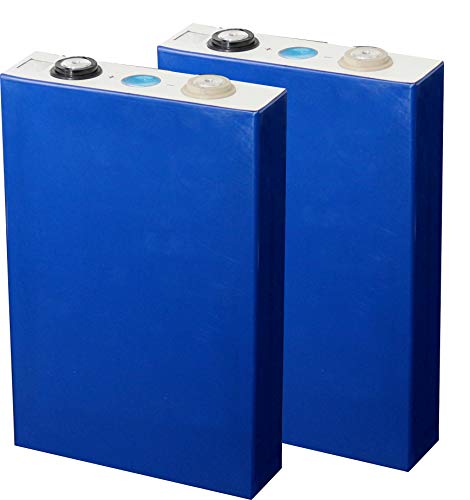
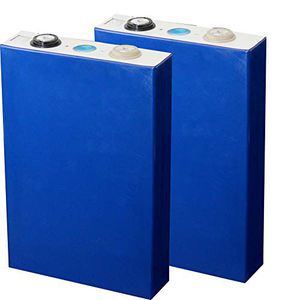
This item included 2 cells batteries, each 336wh total 672wh
The voltage of each cell is 3.2v, capacity is 105ah, then you can get a pack of 3.2v-210ah, or 6.4v-105ah, if you hope get 12v, then you should buy 2 items(4 cells) at least, it is 12.8v-105ah
History LiFePO4 is a natural mineral of the olivine family (triphylite). Its use as a battery electrode which was first described in published literature by John B. Goodenough's research group at the University of Texas in 1996, as a cathode material for rechargeable lithium batteries. Because of its low cost, non-toxicity, the natural abundance of iron, its excellent thermal stability, safety characteristics, electrochemical performance, and specific capacity (170 mA·h/g, or 610 C/g) it gained some market acceptance.The chief barrier to commercialization was its intrinsically low electrical conductivity. This problem was overcome by reducing the particle size, coating the LiFePO4 particles with conductive materials such as carbon, or both. This approach was developed by Michel Armand and his coworkers. Another approach by Yet Ming Chiang's group consisted of doping LFP with cations of materials such as aluminium, niobium, and zirconium. Products are now in mass production and are used in industrial products by major corporations including Black and Decker's DeWalt brand, the Fisker Karma, Daimler AG, Cessna and BAE Systems. MIT introduced a new coating that allows the ions to move more easily within the battery. The "Beltway Battery" utilizes a bypass system that allows the lithium ions to enter and leave the electrodes at a speed great enough to fully charge a battery in under a minute. The scientists discovered that by coating lithium iron phosphate particles in a glassy material called lithium pyrophosphate
The voltage of each cell is 3.2v, capacity is 105ah, then you can get a pack of 3.2v-210ah, or 6.4v-105ah, if you hope get 12v, then you should buy 2 items(4 cells) at least, it is 12.8v-105ah
History LiFePO4 is a natural mineral of the olivine family (triphylite). Its use as a battery electrode which was first described in published literature by John B. Goodenough's research group at the University of Texas in 1996, as a cathode material for rechargeable lithium batteries. Because of its low cost, non-toxicity, the natural abundance of iron, its excellent thermal stability, safety characteristics, electrochemical performance, and specific capacity (170 mA·h/g, or 610 C/g) it gained some market acceptance.The chief barrier to commercialization was its intrinsically low electrical conductivity. This problem was overcome by reducing the particle size, coating the LiFePO4 particles with conductive materials such as carbon, or both. This approach was developed by Michel Armand and his coworkers. Another approach by Yet Ming Chiang's group consisted of doping LFP with cations of materials such as aluminium, niobium, and zirconium. Products are now in mass production and are used in industrial products by major corporations including Black and Decker's DeWalt brand, the Fisker Karma, Daimler AG, Cessna and BAE Systems. MIT introduced a new coating that allows the ions to move more easily within the battery. The "Beltway Battery" utilizes a bypass system that allows the lithium ions to enter and leave the electrodes at a speed great enough to fully charge a battery in under a minute. The scientists discovered that by coating lithium iron phosphate particles in a glassy material called lithium pyrophosphate
2x Cells Eastup Lithium Iron Phosphate (LiFePo4) Battery Cells 3.2V-105AH 336Wh 10 Years Lifetime.
Current Price
$510
Average
$510
Min Price
$510
Max Price
$510
Description
This item included 2 cells batteries, each 336wh total 672wh
The voltage of each cell is 3.2v, capacity is 105ah, then you can get a pack of 3.2v-210ah, or 6.4v-105ah, if you hope get 12v, then you should buy 2 items(4 cells) at least, it is 12.8v-105ah
History LiFePO4 is a natural mineral of the olivine family (triphylite). Its use as a battery electrode which was first described in published literature by John B. Goodenough's research group at the University of Texas in 1996, as a cathode material for rechargeable lithium batteries. Because of its low cost, non-toxicity, the natural abundance of iron, its excellent thermal stability, safety characteristics, electrochemical performance, and specific capacity (170 mA·h/g, or 610 C/g) it gained some market acceptance.The chief barrier to commercialization was its intrinsically low electrical conductivity. This problem was overcome by reducing the particle size, coating the LiFePO4 particles with conductive materials such as carbon, or both. This approach was developed by Michel Armand and his coworkers. Another approach by Yet Ming Chiang's group consisted of doping LFP with cations of materials such as aluminium, niobium, and zirconium. Products are now in mass production and are used in industrial products by major corporations including Black and Decker's DeWalt brand, the Fisker Karma, Daimler AG, Cessna and BAE Systems. MIT introduced a new coating that allows the ions to move more easily within the battery. The "Beltway Battery" utilizes a bypass system that allows the lithium ions to enter and leave the electrodes at a speed great enough to fully charge a battery in under a minute. The scientists discovered that by coating lithium iron phosphate particles in a glassy material called lithium pyrophosphate
The voltage of each cell is 3.2v, capacity is 105ah, then you can get a pack of 3.2v-210ah, or 6.4v-105ah, if you hope get 12v, then you should buy 2 items(4 cells) at least, it is 12.8v-105ah
History LiFePO4 is a natural mineral of the olivine family (triphylite). Its use as a battery electrode which was first described in published literature by John B. Goodenough's research group at the University of Texas in 1996, as a cathode material for rechargeable lithium batteries. Because of its low cost, non-toxicity, the natural abundance of iron, its excellent thermal stability, safety characteristics, electrochemical performance, and specific capacity (170 mA·h/g, or 610 C/g) it gained some market acceptance.The chief barrier to commercialization was its intrinsically low electrical conductivity. This problem was overcome by reducing the particle size, coating the LiFePO4 particles with conductive materials such as carbon, or both. This approach was developed by Michel Armand and his coworkers. Another approach by Yet Ming Chiang's group consisted of doping LFP with cations of materials such as aluminium, niobium, and zirconium. Products are now in mass production and are used in industrial products by major corporations including Black and Decker's DeWalt brand, the Fisker Karma, Daimler AG, Cessna and BAE Systems. MIT introduced a new coating that allows the ions to move more easily within the battery. The "Beltway Battery" utilizes a bypass system that allows the lithium ions to enter and leave the electrodes at a speed great enough to fully charge a battery in under a minute. The scientists discovered that by coating lithium iron phosphate particles in a glassy material called lithium pyrophosphate
Price will be lower
in next 2 weeks
in next 2 weeks
According to the data, price will be lower in next two weeks, so not waste your money and track better price!