Description
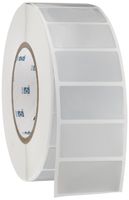
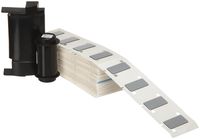
B-473 has a static dissipative adhesive and is supplied on a static dissipative release liner. It has surface resistivity values in the recommended range for Dissipative ESD Packaging Materials as defined in Table 1 of ANSI/ESD S20.20 ( 1x10⁵ to < 1x10¹² ohms). B-473 also meets the requirements of EIA-541 "Packaging Material Standards for ESD Sensitive Items" in which a charged material must decay to 1 percent of its initial voltage in less than 2 seconds. Print technology: Thermal Transfer. Material type: White Polyester. Finish: Glossy. Adhesive: Static Dissipative Permanent acrylic. Applications: Printed circuit board and electronic component post-process labeling. Recommended Ribbons: Brady Series R6000. Regulatory/Agency Approvals: UL: B-473 is a UL Recognized Component to UL969 Labeling and Marking Standard when printed with Brady Series R6000 ribbon. See UL file MH17154 for specific details. UL information can be accessed online at UL.com. Search in Certifications area. CSA: B-473 is CSA Accepted to C22.2 No. 0.15-95 Adhesive Labels Standard when printed with the Brady Series R6000 ribbon. See CSA file 041833 for specific details. CSA information can be accessed online at directories.csa-international.org. SP Provning Forskning: ESD-approved for IEC 61340-5-1 and EN 100015-1 per SP Swedish National Testing and Research Institute (see ESD-approval DNo: 230-02-0034). Brady B-473 is RoHS complinat to 2005/618/EC MCV amendment to RoHS Directive 2002/95/EC.
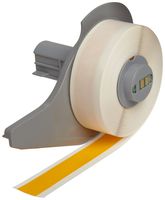
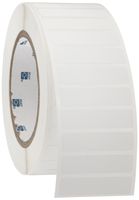
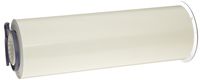
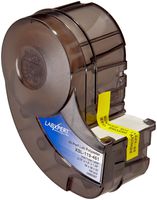
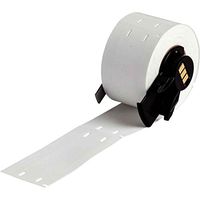
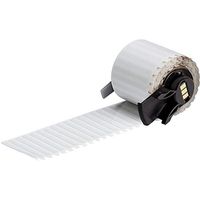
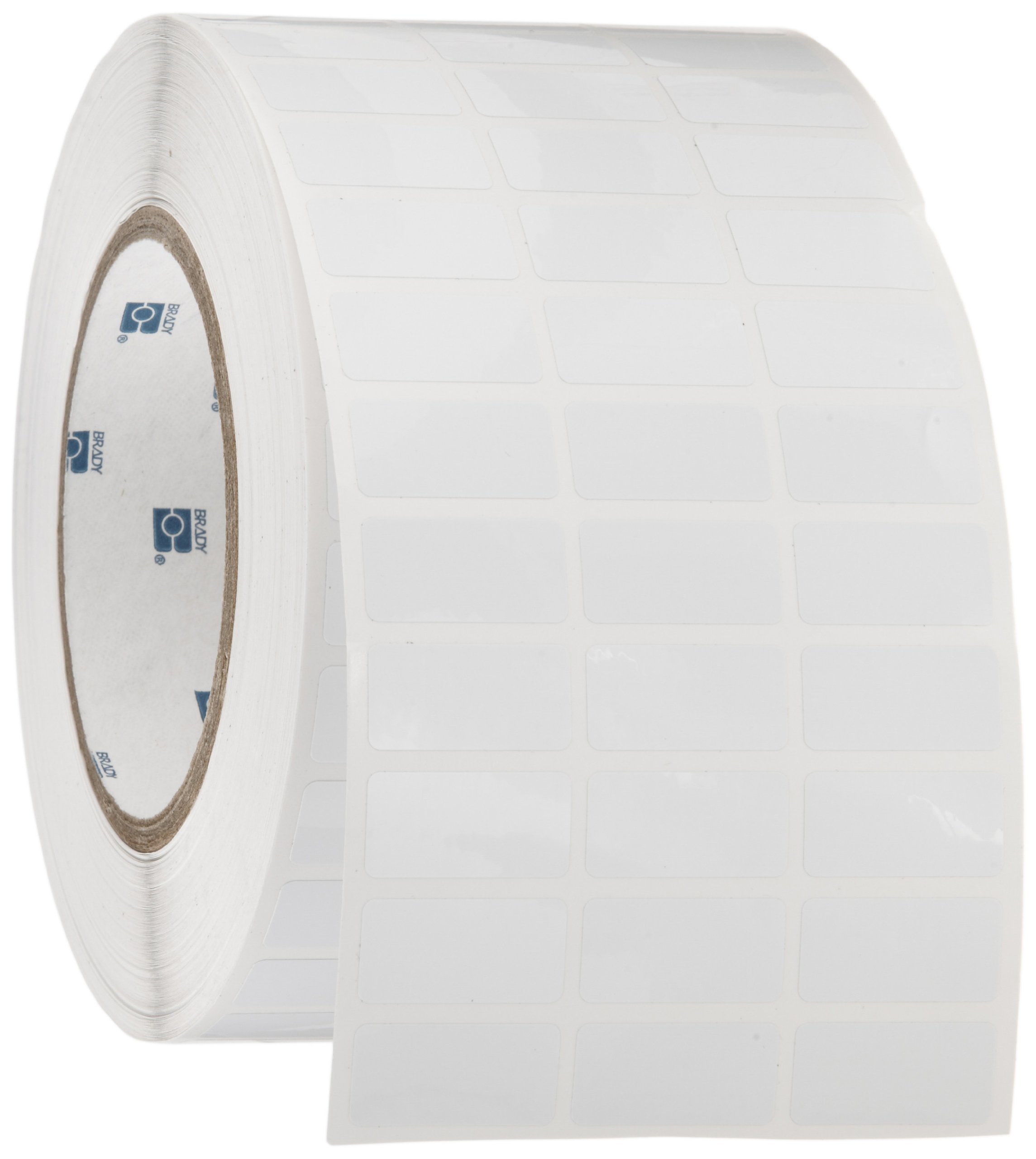
Brady THT-5-473-10 1" Width x 0.5" Height, B-473 Static Dissipative Polyester, Gloss Finish White Thermal Transfer Printable Label (10000 per Roll)
Price is below average
Current Price
$36.93
Average
$106.8
Min Price
$29.76
Max Price
$219.49
Price dynamics
65%
Description
B-473 has a static dissipative adhesive and is supplied on a static dissipative release liner. It has surface resistivity values in the recommended range for Dissipative ESD Packaging Materials as defined in Table 1 of ANSI/ESD S20.20 ( 1x10⁵ to < 1x10¹² ohms). B-473 also meets the requirements of EIA-541 "Packaging Material Standards for ESD Sensitive Items" in which a charged material must decay to 1 percent of its initial voltage in less than 2 seconds. Print technology: Thermal Transfer. Material type: White Polyester. Finish: Glossy. Adhesive: Static Dissipative Permanent acrylic. Applications: Printed circuit board and electronic component post-process labeling. Recommended Ribbons: Brady Series R6000. Regulatory/Agency Approvals: UL: B-473 is a UL Recognized Component to UL969 Labeling and Marking Standard when printed with Brady Series R6000 ribbon. See UL file MH17154 for specific details. UL information can be accessed online at UL.com. Search in Certifications area. CSA: B-473 is CSA Accepted to C22.2 No. 0.15-95 Adhesive Labels Standard when printed with the Brady Series R6000 ribbon. See CSA file 041833 for specific details. CSA information can be accessed online at directories.csa-international.org. SP Provning Forskning: ESD-approved for IEC 61340-5-1 and EN 100015-1 per SP Swedish National Testing and Research Institute (see ESD-approval DNo: 230-02-0034). Brady B-473 is RoHS complinat to 2005/618/EC MCV amendment to RoHS Directive 2002/95/EC.
Price will be lower
in next 2 weeks
in next 2 weeks
According to the data, price will be lower in next two weeks, so not waste your money and track better price!
Product review & video
number 41 what is the best coefficient of performance for a heat pump that has a hot reservoir temperature of 50 degrees celsius and a cold reservoir temperature of negative 20 degrees celsius all right so i'm going to use the formula i developed in number 37 so please check that number out number 37 here in this chapter for how i arrived at this formula the coefficient of performance here for a heat pump is basically going to be equal to 1 over the efficiency if i want to find the best possible coffee performance that i'm going to be using the car no efficiency all right so now i realized well they told me two temperatures they didn't tell me the efficiency so i just have to think how to do a quick substitution and i realized that the efficiency cardinal efficiency is related to temperatures via that formula so i can basically just do a simple substitution here right where i say that t