Description
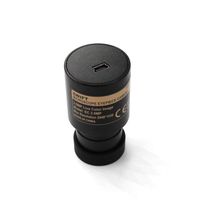
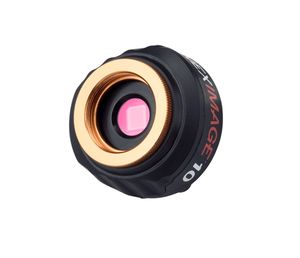
You have your new telescope and have observed Saturn and Jupiter. Now you're ready to take the next step and start imaging them. But where do you begin? The Celestron NexImage 10 Solar System Imager is the perfect solution. The NexImage 10 is our first NexImage series camera to incorporate USB 3.0 SuperSpeed! With more than ten million pixels coupled with high speed data transmission, the NexImage 10 produces clear and detailed planetary images like never before. With super small 1.67µm pixels, smaller telescopes with shorter focal lengths are still going to yield tremendous planetary detail. It’s one of the best valued, high-res USB 3 planetary imaging cameras on the market. Best of all, NexImage includes everything you need to get started, including Celestron's easy-to-use software suite. The iCap capture software and RegiStax stacking software are the same powerful programs included with Celestron's high-end Skyris cameras. Simply point your telescope at the Moon or a planet and record a quick video. The software analyzes each frame of video, throws away the fuzzy ones, and perfectly aligns the remaining images. The result is a bright, clear image with the maximum amount of color and detail. NexImage 10 is a great way to get started with astro imaging, especially if you live in a light-polluted area. If you can see the planet in the sky, you can image it with NexImage 10! Now Mac OS X compatible!
Celestron NexImage 10MP - Solar System Imager Clear Detailed Planetary Images, Black (93708)
Price is below average
Current Price
$214.6
Average
$222.38
Min Price
$209.99
Max Price
$249.95
Price dynamics
3%
Description
You have your new telescope and have observed Saturn and Jupiter. Now you're ready to take the next step and start imaging them. But where do you begin? The Celestron NexImage 10 Solar System Imager is the perfect solution. The NexImage 10 is our first NexImage series camera to incorporate USB 3.0 SuperSpeed! With more than ten million pixels coupled with high speed data transmission, the NexImage 10 produces clear and detailed planetary images like never before. With super small 1.67µm pixels, smaller telescopes with shorter focal lengths are still going to yield tremendous planetary detail. It’s one of the best valued, high-res USB 3 planetary imaging cameras on the market. Best of all, NexImage includes everything you need to get started, including Celestron's easy-to-use software suite. The iCap capture software and RegiStax stacking software are the same powerful programs included with Celestron's high-end Skyris cameras. Simply point your telescope at the Moon or a planet and record a quick video. The software analyzes each frame of video, throws away the fuzzy ones, and perfectly aligns the remaining images. The result is a bright, clear image with the maximum amount of color and detail. NexImage 10 is a great way to get started with astro imaging, especially if you live in a light-polluted area. If you can see the planet in the sky, you can image it with NexImage 10! Now Mac OS X compatible!
Price will be lower
in next 2 weeks
in next 2 weeks
According to the data, price will be lower in next two weeks, so not waste your money and track better price!
Product review & video
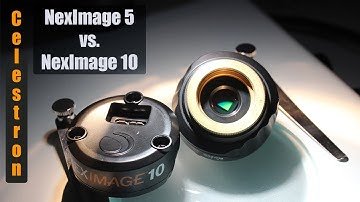
hey everyone this is Lyman in today's video I'm going to be comparing the celestron Mex image 5 with the next image 10 see obviously the differences in them primarily what 5 megapixels does so this is obviously a 10 megapixel camera this is a 5 just how much difference does a 5 megapixel camera made now the next image 10 does have some other things going for it which might make it a little better so I'm not sure how fair of a fight this is but we're going to compare them anyway in CL the next image 5 compares to the 10 so I'm going to compare these two cameras using a microscope now something you probably didn't know about me is I have my bachelor's degree in biology and I love looking at botanical and biological specimens under the microscope but I think it's a really great way to compare these 2 cameras because when you're imaging planets you're usually not using the full resolution o