Description
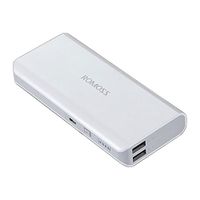
A large-sized rechargeable battery pack for your Raspberry Pi (or Arduino, or Propeller, or anything else that uses 5V!). This pack is intended for providing a lot of power to an GPS, cell phone, tablet, etc but we found it does a really good job of powering other miniature computers and micro-controllers. If you want something a little smaller, we have a 4400mAh power pack with one USB port that can provide up to 1A We tested it with an iPad mini, iPad 1 & 3 and iPhone 5 & 5s so we know it will charge those models.
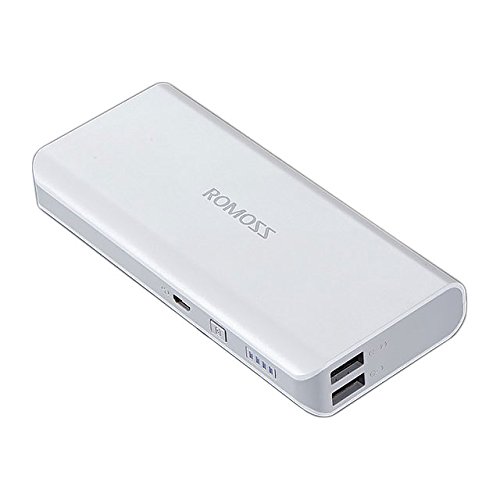
Inside is a massive 10,000mAh lithium ion battery, a charging circuit (you charge it via the USB cable attached), and two boost converters that provide 5VDC, 1A and 2A each via a USB A port. (The markings indicate one is good for 1A and one is good for 2A) The 2A output is best for charging tablets or other really power-hungry devices. But either can be used for when you want to power a Beagle Bone or Raspberry Pi, wifi adapters, maybe even small displays. We hooked it up to a 2.5" NTSC display (powered from the Pi's 5V breakout lines), wireless keyboard/mouse and a small WiFi dongle and it hummed along just fine as a mini computing setup!
The charging circuit will draw 1A from a 5V supply (plug a microUSB connector into the pack and then to a computer or wall adapter). You can charge and power something at the same time but the output switches to the USB input when charging so the output voltage may fluctuate. Its not good as a 'UPS' power supply for an embedded linux board, although microcontrollers like Arduino may not care about the voltage drop as much. Also, there's ~80% efficiency loss on both ends so if you charge it at 1A and draw 1A at the same time, the battery pack will eventually go empty. However, if you're powering something thats 500mA or less, you can keep it topped up no problem.
Inside is a massive 10,000mAh lithium ion battery, a charging circuit (you charge it via the USB cable attached), and two boost converters that provide 5VDC, 1A and 2A each via a USB A port. (The markings indicate one is good for 1A and one is good for 2A) The 2A output is best for charging tablets or other really power-hungry devices. But either can be used for when you want to power a Beagle Bone or Raspberry Pi, wifi adapters, maybe even small displays. We hooked it up to a 2.5" NTSC display (powered from the Pi's 5V breakout lines), wireless keyboard/mouse and a small WiFi dongle and it hummed along just fine as a mini computing setup!
The charging circuit will draw 1A from a 5V supply (plug a microUSB connector into the pack and then to a computer or wall adapter). You can charge and power something at the same time but the output switches to the USB input when charging so the output voltage may fluctuate. Its not good as a 'UPS' power supply for an embedded linux board, although microcontrollers like Arduino may not care about the voltage drop as much. Also, there's ~80% efficiency loss on both ends so if you charge it at 1A and draw 1A at the same time, the battery pack will eventually go empty. However, if you're powering something thats 500mA or less, you can keep it topped up no problem.
Adafruit Accessories USB Battery Pack for Raspberry Pi
Current Price
$44.99
Average
$44.99
Min Price
$44.99
Max Price
$44.99
Description
A large-sized rechargeable battery pack for your Raspberry Pi (or Arduino, or Propeller, or anything else that uses 5V!). This pack is intended for providing a lot of power to an GPS, cell phone, tablet, etc but we found it does a really good job of powering other miniature computers and micro-controllers. If you want something a little smaller, we have a 4400mAh power pack with one USB port that can provide up to 1A We tested it with an iPad mini, iPad 1 & 3 and iPhone 5 & 5s so we know it will charge those models.
Inside is a massive 10,000mAh lithium ion battery, a charging circuit (you charge it via the USB cable attached), and two boost converters that provide 5VDC, 1A and 2A each via a USB A port. (The markings indicate one is good for 1A and one is good for 2A) The 2A output is best for charging tablets or other really power-hungry devices. But either can be used for when you want to power a Beagle Bone or Raspberry Pi, wifi adapters, maybe even small displays. We hooked it up to a 2.5" NTSC display (powered from the Pi's 5V breakout lines), wireless keyboard/mouse and a small WiFi dongle and it hummed along just fine as a mini computing setup!
The charging circuit will draw 1A from a 5V supply (plug a microUSB connector into the pack and then to a computer or wall adapter). You can charge and power something at the same time but the output switches to the USB input when charging so the output voltage may fluctuate. Its not good as a 'UPS' power supply for an embedded linux board, although microcontrollers like Arduino may not care about the voltage drop as much. Also, there's ~80% efficiency loss on both ends so if you charge it at 1A and draw 1A at the same time, the battery pack will eventually go empty. However, if you're powering something thats 500mA or less, you can keep it topped up no problem.
Inside is a massive 10,000mAh lithium ion battery, a charging circuit (you charge it via the USB cable attached), and two boost converters that provide 5VDC, 1A and 2A each via a USB A port. (The markings indicate one is good for 1A and one is good for 2A) The 2A output is best for charging tablets or other really power-hungry devices. But either can be used for when you want to power a Beagle Bone or Raspberry Pi, wifi adapters, maybe even small displays. We hooked it up to a 2.5" NTSC display (powered from the Pi's 5V breakout lines), wireless keyboard/mouse and a small WiFi dongle and it hummed along just fine as a mini computing setup!
The charging circuit will draw 1A from a 5V supply (plug a microUSB connector into the pack and then to a computer or wall adapter). You can charge and power something at the same time but the output switches to the USB input when charging so the output voltage may fluctuate. Its not good as a 'UPS' power supply for an embedded linux board, although microcontrollers like Arduino may not care about the voltage drop as much. Also, there's ~80% efficiency loss on both ends so if you charge it at 1A and draw 1A at the same time, the battery pack will eventually go empty. However, if you're powering something thats 500mA or less, you can keep it topped up no problem.
Price will be lower
in next 2 weeks
in next 2 weeks
According to the data, price will be lower in next two weeks, so not waste your money and track better price!
Product review & video
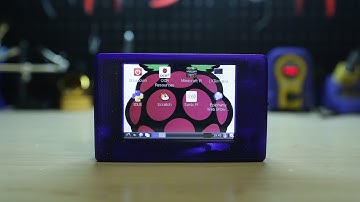
hey what's up everybody Noah here for Adafruit today we're taking a look at the family of piety of t's the Adafruit PI T of T is a line of mini displays that were designed for the Raspberry Pi they're pretty awesome because they snap right on top just like a PI hat and they have an extended GPIO breakout so you can expand your Raspberry Pi projects so they come in a variety of different sizes we have a 2.2 a 2.8 and a 3.5 inch screen and some of them are even available with resistive and capacitive touch overlays so you've seen us use the 2.8 quite a bit of a projects like a DIY Game Boy and our mini Mac project you can check those out over here if you haven't already you can learn how to build your own but in this project we thought you know why not make a simple and portable Raspberry Pi so today we're building a portable touch pie using the model a plus and a PI T of T 3.5 inch displ

Similar products