- HomeElectronicsCamera & PhotoBinoculars & ScopesMicroscopesCompound MicroscopesCompound Trinocular Microscopes
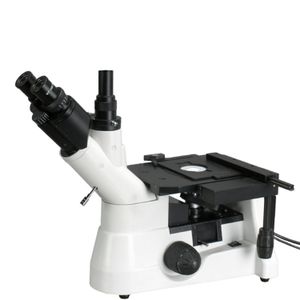
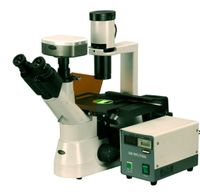
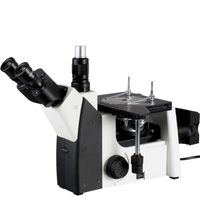
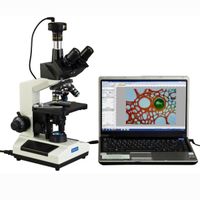
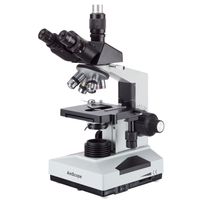
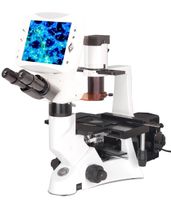
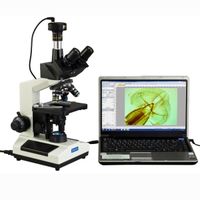
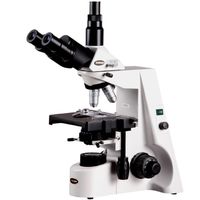
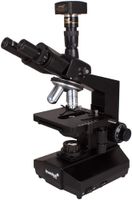
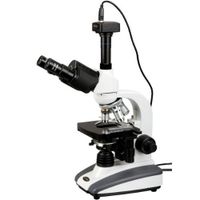
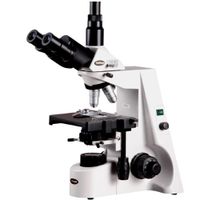
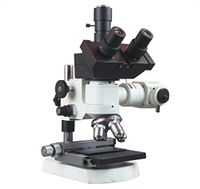
The AmScope ME1400T inverted metallurgical trinocular microscope has a pair of 10x20mm super-widefield high-eyepoint eyepieces, a 10x20mm measuring eyepiece, a quintuple nosepiece with four DIN metallurgical objectives, episcopic Brightfield and polarizing halogen illumination, a polarizing condenser, and a double-layer mechanical stage with a stage stop to protect slides and objectives from damage. The trinocular viewing head has a vertical camera mount, a Siedentopf binocular head to adjust interpupillary distance, a fixed 45-degree vertical inclination to reduce eye and neck strain. The vertical trinocular port has a 100% light-splitting rate and can be used as a 23mm photo port (camera sold separately). The Siedentopf head has a range of 55 to 75mm to accommodate individual eye differences, and bilateral dioptric adjustment to accommodate individual eye-strength differences. A Siedentopf binocular head enables the viewer to change the interpupillary distance without changing the tube length, eliminating the need to re-focus the image. The microscope has a pair of 10x high-eyepoint super-widefield eyepieces, and one 10x high-eyepoint super-widefield eyepiece. The 10x measuring eyepiece can be used in place of one WF10x20mm eyepiece and has a built-in reticle and micrometer with 0.1mm graduations. High-eyepoint objectives ease viewing for viewers who wear glasses. The microscope has a forward-facing quintuple nosepiece and includes 4x, 10x, 20x, and 40x DIN metallurgical objectives that combine with the eyepieces to provide color correction of magnified images. A metallurgical microscope uses transmitted and reflected light to view opaque or metallic specimens, or larger specimens that cannot be viewed on a standard microscope stage.
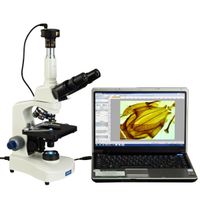
The microscope has reflected and transmitted episcopic Brightfield and polarizing illumination. Polarizing illumination reflects light off the specimen for enhanced visibility of opaque specimens. Brightfi
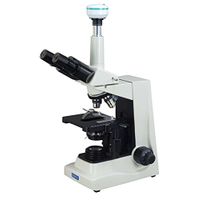
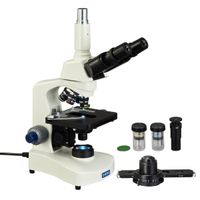
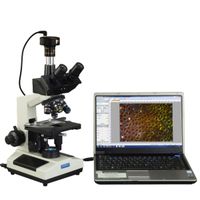
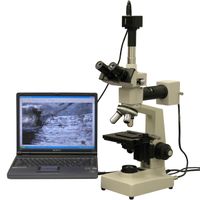
AmScope ME1400T Inverted Trinocular Metallurgical Microscope, 40X-400X Magnification, WF10x Eyepieces with Reticle, Kohler Condenser, 30W Halogen Illumination with Rheostat, Double-Layer Mechanical Stage, 85-230V
The AmScope ME1400T inverted metallurgical trinocular microscope has a pair of 10x20mm super-widefield high-eyepoint eyepieces, a 10x20mm measuring eyepiece, a quintuple nosepiece with four DIN metallurgical objectives, episcopic Brightfield and polarizing halogen illumination, a polarizing condenser, and a double-layer mechanical stage with a stage stop to protect slides and objectives from damage. The trinocular viewing head has a vertical camera mount, a Siedentopf binocular head to adjust interpupillary distance, a fixed 45-degree vertical inclination to reduce eye and neck strain. The vertical trinocular port has a 100% light-splitting rate and can be used as a 23mm photo port (camera sold separately). The Siedentopf head has a range of 55 to 75mm to accommodate individual eye differences, and bilateral dioptric adjustment to accommodate individual eye-strength differences. A Siedentopf binocular head enables the viewer to change the interpupillary distance without changing the tube length, eliminating the need to re-focus the image. The microscope has a pair of 10x high-eyepoint super-widefield eyepieces, and one 10x high-eyepoint super-widefield eyepiece. The 10x measuring eyepiece can be used in place of one WF10x20mm eyepiece and has a built-in reticle and micrometer with 0.1mm graduations. High-eyepoint objectives ease viewing for viewers who wear glasses. The microscope has a forward-facing quintuple nosepiece and includes 4x, 10x, 20x, and 40x DIN metallurgical objectives that combine with the eyepieces to provide color correction of magnified images. A metallurgical microscope uses transmitted and reflected light to view opaque or metallic specimens, or larger specimens that cannot be viewed on a standard microscope stage.
The microscope has reflected and transmitted episcopic Brightfield and polarizing illumination. Polarizing illumination reflects light off the specimen for enhanced visibility of opaque specimens. Brightfi
in next 2 weeks
By clicking "Accept All", you consent to our use of cookies.