- HomeElectronicsCamera & PhotoBinoculars & ScopesMicroscopesCompound MicroscopesCompound Trinocular Microscopes
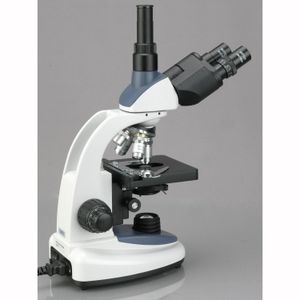
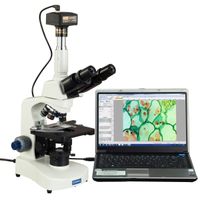
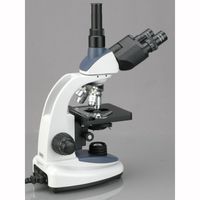
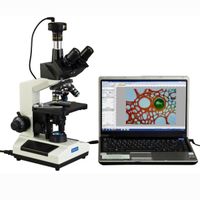
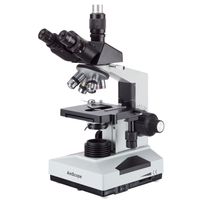
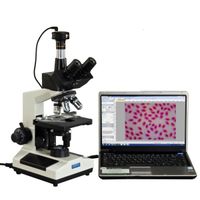
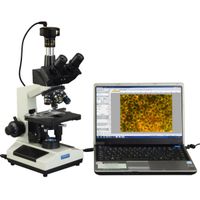
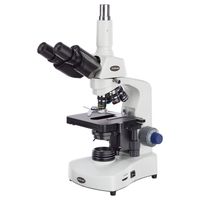
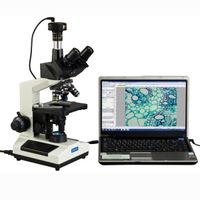
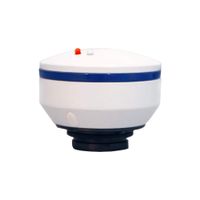
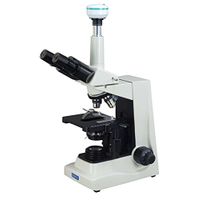
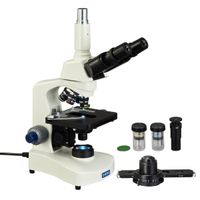
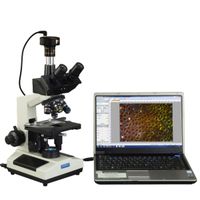
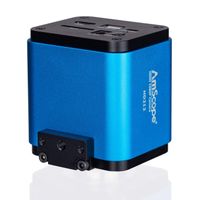
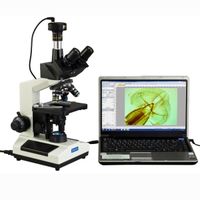
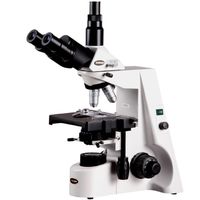
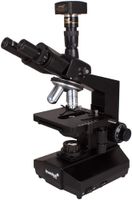
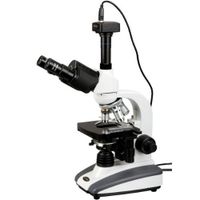
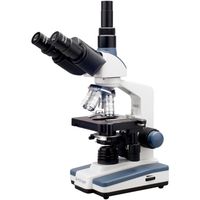
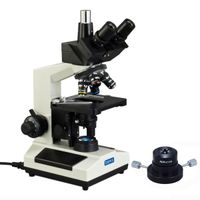
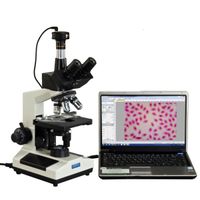
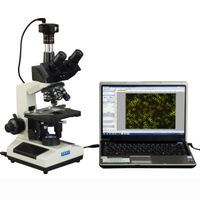
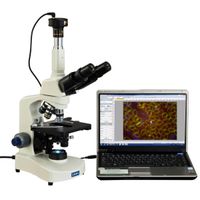
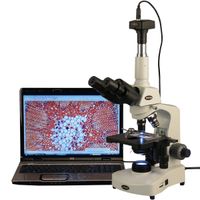
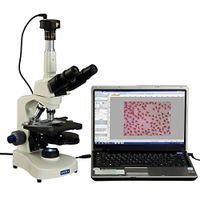
The AmScope T380C compound trinocular microscope has interchangeable pairs of 10x widefield and 25x widefield eyepieces, a reverse-mounted nosepiece with four DIN achromatic objectives, Brightfield LED illumination, and a double-layer mechanical stage. The trinocular head has a Siedentopf binocular mount with an adjustable 48 to 75mm interpupillary distance, a fixed 30-degree vertical inclination to reduce eye and neck strain, and a 360-degree rotation capability to provide a more comprehensive view and enable sharing. Dioptric adjustment accommodates individual eye-strength differences. The vertical trinocular port accepts a camera with a 23mm or C-Mount adapter (camera sold separately). The reverse-mounted nosepiece has 4x, 10x, 40xS (spring), and 100xS (spring, oil) DIN achromatic objectives that combine with the eyepieces to provide color correction of magnified images. The 40xS objective is spring loaded to prevent slide damage when focusing. The 100xS spring-loaded oil-immersion objective uses oil between the specimen and the objective lens to provide increased resolution over a standard objective. A compound microscope is used for inspection and dissection of specimens when two-dimensional images are desired.
The microscope has lower (transmitted, diascopic) Brightfield illumination that transmits light up through the specimen for enhanced visibility of translucent and transparent objects. Brightfield (BF) illumination allows the specimen to absorb light, resulting in a dark image on a light background. Rheostat-controlled LED illumination provides bright, cool light for working with temperature-sensitive or live specimens. The 1.25 NA Abbe condenser is mounted on a rack-and-pinion control system, can be adjusted to control the distance of the light from the stage, and has an iris diaphragm to optimize the amount of light illuminating the specimen. A swing-out filter holder accepts color filters. The double-layer mechanical stage,
AmScope T380C Professional Compound Trinocular Microscope, 40X-2500X Magnification, WF10x and WF25x Eyepieces, Brightfield, LED Illumination, Abbe Condenser, Double-Layer Mechanical Stage, 85-265V Wide-Voltage Power Supply
The AmScope T380C compound trinocular microscope has interchangeable pairs of 10x widefield and 25x widefield eyepieces, a reverse-mounted nosepiece with four DIN achromatic objectives, Brightfield LED illumination, and a double-layer mechanical stage. The trinocular head has a Siedentopf binocular mount with an adjustable 48 to 75mm interpupillary distance, a fixed 30-degree vertical inclination to reduce eye and neck strain, and a 360-degree rotation capability to provide a more comprehensive view and enable sharing. Dioptric adjustment accommodates individual eye-strength differences. The vertical trinocular port accepts a camera with a 23mm or C-Mount adapter (camera sold separately). The reverse-mounted nosepiece has 4x, 10x, 40xS (spring), and 100xS (spring, oil) DIN achromatic objectives that combine with the eyepieces to provide color correction of magnified images. The 40xS objective is spring loaded to prevent slide damage when focusing. The 100xS spring-loaded oil-immersion objective uses oil between the specimen and the objective lens to provide increased resolution over a standard objective. A compound microscope is used for inspection and dissection of specimens when two-dimensional images are desired.
The microscope has lower (transmitted, diascopic) Brightfield illumination that transmits light up through the specimen for enhanced visibility of translucent and transparent objects. Brightfield (BF) illumination allows the specimen to absorb light, resulting in a dark image on a light background. Rheostat-controlled LED illumination provides bright, cool light for working with temperature-sensitive or live specimens. The 1.25 NA Abbe condenser is mounted on a rack-and-pinion control system, can be adjusted to control the distance of the light from the stage, and has an iris diaphragm to optimize the amount of light illuminating the specimen. A swing-out filter holder accepts color filters. The double-layer mechanical stage,
in next 2 weeks
By clicking "Accept All", you consent to our use of cookies.