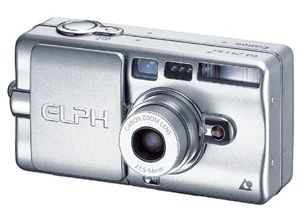
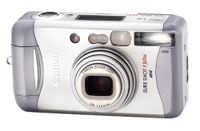
The sleek, compact Elph Z3 from Canon slips easily into a purse or pocket, and its stylish, futuristic design and advanced features make this APS camera a must-have for gadget lovers. With all the attention Canon's Digital Elph series has been receiving, it's easy to forget that the first Elph models were film cameras. This latest-generation model has much in common with its predecessors, including a chrome-and-aluminum body, diminutive dimensions, and use of the Advanced Photo System (APS) format.
Refinements for this model include a longer, lower shape--less like a deck of cards and more like a cell phone--and a backlit status LCD that emits a cool blue glow at the push of a button. Several other features were revised to improve photo quality, including a redesigned lens and a newly developed passive autofocus system. Additional features include a 2.3x zoom, spot metering, self-timer, and a five-mode flash with red-eye reduction.
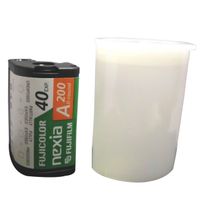
A lithium CR123A battery provides power, and the camera uses APS film, a format jointly developed by five leading photo companies in 1996. The APS format is designed to take advantage of a number of technological advances developed in the decades since the introduction of 35mm film. Here are the main advantages to the APS format:
- Size and convenience: An APS cartridge is smaller than 35mm, and the film is completely enclosed, which simplifies film loading.
- Midroll rewind: Many cameras let you switch film midroll, allowing you to shoot in both color and black and white. Each roll has an indicator on top that lets you know if the film inside is unused, partially exposed, totally exposed, or developed. After developing, the negatives remain inside the cartridge for protection and long-term storage.
- Three print sizes: Most APS cameras let you choose from three proportions for your prints--"classic," which is a 3:2 ratio like 35mm; "HDTV," which is a 16:9 wide-screen format, and "panoramic," w