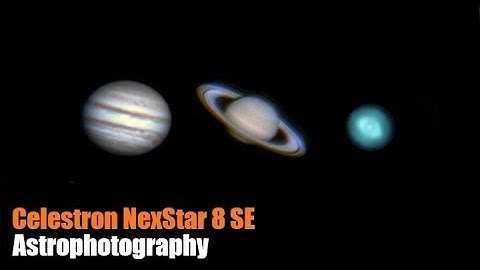
The Nexstar 8 SE upholds Celestron's reputation for quality optics. When I use an 11mm Plossl eyepiece (almost 200x magnification) for example, I can easily see the Cassini Division in Saturn's rings. When I look at Jupiter, the pale orange color of Jupiter's famous Great Red Spot is visible, and I've even been able to identify the polar caps and spot dust storms on the planet Mars. A 20mm Plossl eyepiece (about 100x magnification) is a good choice for viewing galaxies and star clusters. When I look at globular cluster M13 in the constellation Hercules the high contrast XLT optics show me a glowing snowflake made of hundreds of tiny pin-point stars! And a low power 32mm Plossl eyepiece is a good choice for views of larger deep space highlights like the Andromeda Galaxy and the Orion Nebula.
Celestron's patented "SkyAlign" system makes the Nexstar 8 SE very easy to use. I just pick the nearest town from the built-in list, enter the date and time, and point the telescope at three bright stars. I don't need a star chart because "SkyAlign" identifies the stars for me. When I just want a quick look at the moon or a planet, I like to use the "Solar System Align" option. After entering the date and time, I just point the telescope at the moon and press the "Align" key. That's all it takes, the computer takes over and the telescope begins tracking quietly and accurately. At star parties I often have my Nexstar up and running while older computerized telescopes are still waiting for their alignment stars to appear in the twilight.
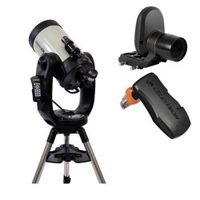
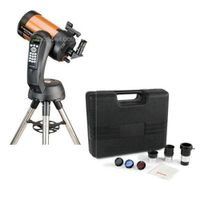
The Nexstar 8 SE comes with
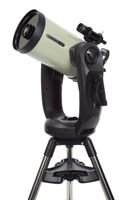
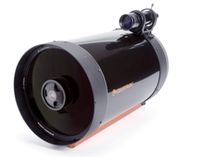
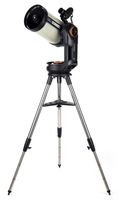
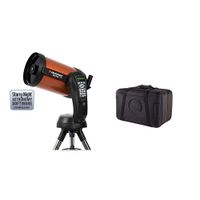
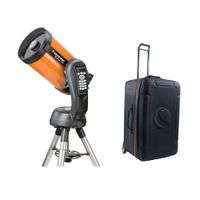
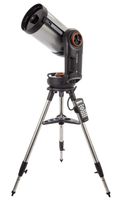
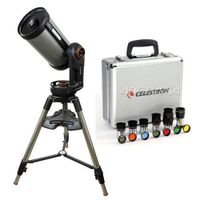
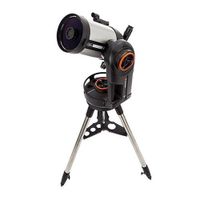
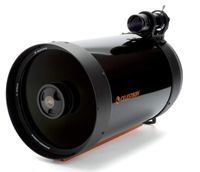
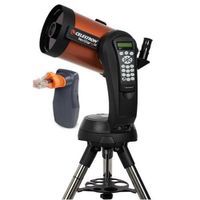
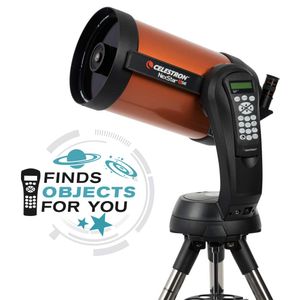
Celestron NexStar 8 SE Telescope
The Nexstar 8 SE upholds Celestron's reputation for quality optics. When I use an 11mm Plossl eyepiece (almost 200x magnification) for example, I can easily see the Cassini Division in Saturn's rings. When I look at Jupiter, the pale orange color of Jupiter's famous Great Red Spot is visible, and I've even been able to identify the polar caps and spot dust storms on the planet Mars. A 20mm Plossl eyepiece (about 100x magnification) is a good choice for viewing galaxies and star clusters. When I look at globular cluster M13 in the constellation Hercules the high contrast XLT optics show me a glowing snowflake made of hundreds of tiny pin-point stars! And a low power 32mm Plossl eyepiece is a good choice for views of larger deep space highlights like the Andromeda Galaxy and the Orion Nebula.
Celestron's patented "SkyAlign" system makes the Nexstar 8 SE very easy to use. I just pick the nearest town from the built-in list, enter the date and time, and point the telescope at three bright stars. I don't need a star chart because "SkyAlign" identifies the stars for me. When I just want a quick look at the moon or a planet, I like to use the "Solar System Align" option. After entering the date and time, I just point the telescope at the moon and press the "Align" key. That's all it takes, the computer takes over and the telescope begins tracking quietly and accurately. At star parties I often have my Nexstar up and running while older computerized telescopes are still waiting for their alignment stars to appear in the twilight.
The Nexstar 8 SE comes with
in next 2 weeks