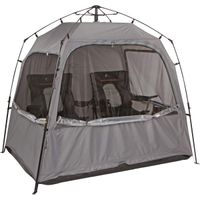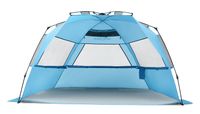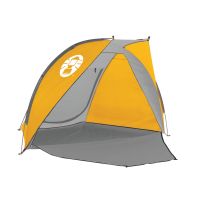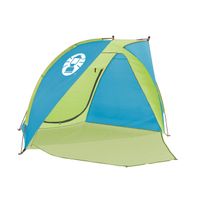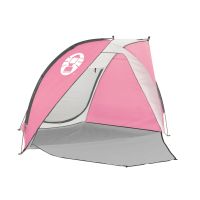
Features:
- Sets up in less than 3 minutes
- Heavy-duty 150D canopy with 50+ UV Guard sun protection
- Sturdy 28mm one-piece steel frame
- Exclusive push-button release levers take it easy on fingers
- Hexagon shape for a distinct shelter
- Wheeled carry bag
- Footed poles for easy securing and stabilization with steel tent pegs
Specifications:
- Shaded Area: 13 by 13 feet
- Footprint: 10 by 10 feet
About Coleman
More than 100 years ago, a young man with an entrepreneurial spirit and a better idea began manufacturing lanterns in Wichita, Kansas. His name was W.C. Coleman, and the company he founded would change life in America. A man plagued with such poor vision he sometimes had to ask classmates to read aloud to him, Coleman saw a brilliant light in 1900 in a drugstore window that stopped him in his tracks. He inquired about the light inside and discovered he was able to read even the small print on a medicine bottle by the illumination. The lamps had mantles, not wicks, and were fueled by gasoline under pressure instead of coal oil. Soon afterward, Coleman started a lighting service that offered a "no light, no pay" clause--a big step forward for merchants who were burned by inferior products that rarely worked--and drew substantial interest from businesses that wanted to keep their lights on after dark. In the
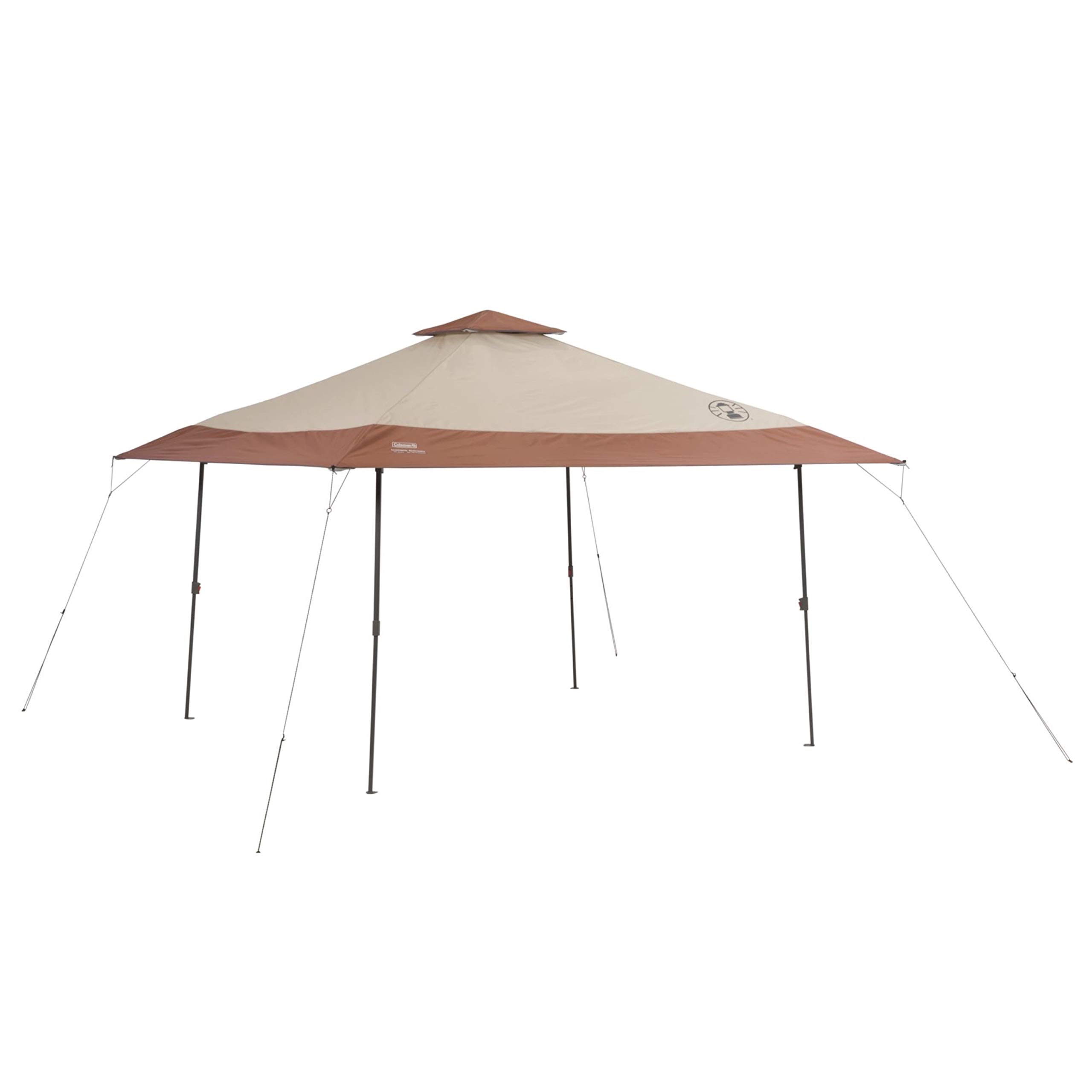
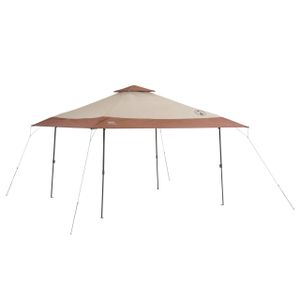
Coleman Instant Pop-Up Canopy Tent and Sun Shelter, 13 x 13 Feet
Features:
- Sets up in less than 3 minutes
- Heavy-duty 150D canopy with 50+ UV Guard sun protection
- Sturdy 28mm one-piece steel frame
- Exclusive push-button release levers take it easy on fingers
- Hexagon shape for a distinct shelter
- Wheeled carry bag
- Footed poles for easy securing and stabilization with steel tent pegs
Specifications:
- Shaded Area: 13 by 13 feet
- Footprint: 10 by 10 feet
About Coleman
More than 100 years ago, a young man with an entrepreneurial spirit and a better idea began manufacturing lanterns in Wichita, Kansas. His name was W.C. Coleman, and the company he founded would change life in America. A man plagued with such poor vision he sometimes had to ask classmates to read aloud to him, Coleman saw a brilliant light in 1900 in a drugstore window that stopped him in his tracks. He inquired about the light inside and discovered he was able to read even the small print on a medicine bottle by the illumination. The lamps had mantles, not wicks, and were fueled by gasoline under pressure instead of coal oil. Soon afterward, Coleman started a lighting service that offered a "no light, no pay" clause--a big step forward for merchants who were burned by inferior products that rarely worked--and drew substantial interest from businesses that wanted to keep their lights on after dark. In the
in next 2 weeks