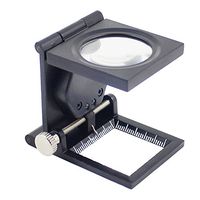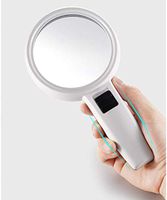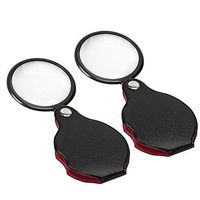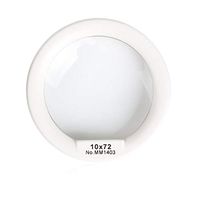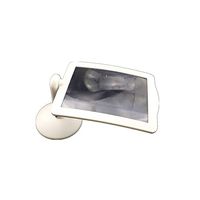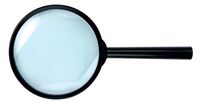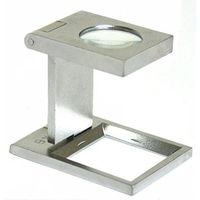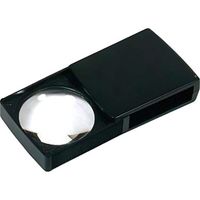
The Eschenbach loupe magnifier has a compact 17mm diameter and a choice of magnification, and is used to enhance the size and resolution of an object or image for a variety of applications including jewelry-making, watch-making, electronic inspection, book-reading, and various hobbies. Achromatic lenses cemented together eliminate extraneous colors, providing an accurate depiction of an object. Two plano-convex lenses correct the image for distortion-free viewing side-to-side. Achromatic and aplanatic lenses work together to provide a magnified image that is free of distortion and color aberration. The black metal lens frame protects the optics from damage. The optics can be pivoted into the chrome-plated brass handle to protect the magnifier from damage while not in use.
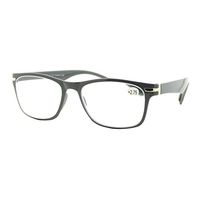
Diopter (D) is a technical term for the measurement of the light curvature and thickness of a lens. A dioptric number and a magnification number are not the same thing. Diopter strength represents a specific magnification power (X). For example, a 5-diopter provides 2.5X magnification (at a distance of 8"). The higher the diopter, the more magnification a lens can provide. As magnification increases, distance to the object (focal length), and field of view (diameter, or narrowness of view) decrease. Magnifiers and prescription eyeglasses have a diopter value, such as 1.5 or 2. The dioptric strength of an accessory lens, such as prescription eyeglasses or an eye loupe, must be added to the dioptric strength of the magnifier to calculate total magnification.
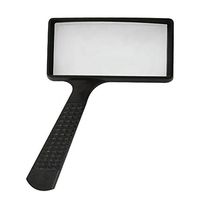
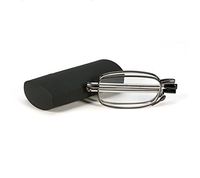
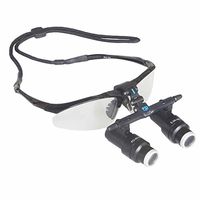
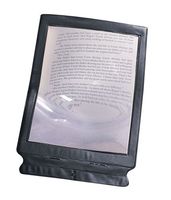
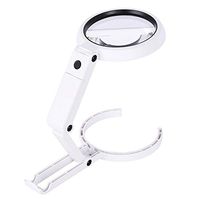
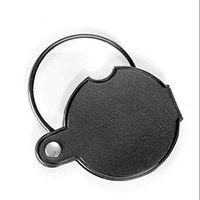
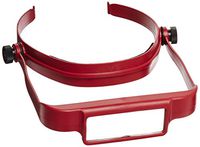
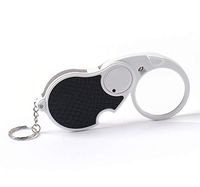
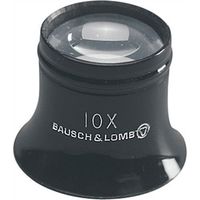
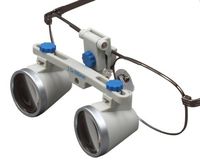
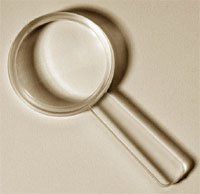
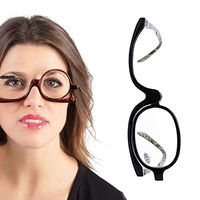
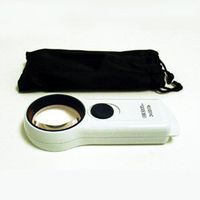
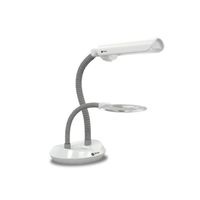
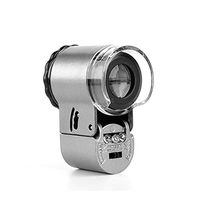
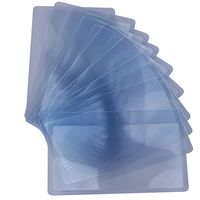
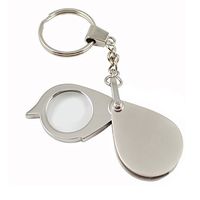
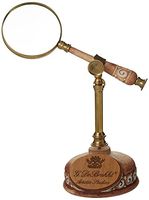
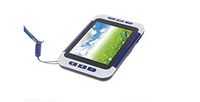
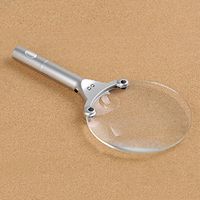
Magnifiers are devices used to enlarge the visual appearance of an object or image. Magnifiers come in a variety of styles such as hand-held, headband, standing, clip-on, eye loupe, and those that hang in a necklace form, or fit in a trouser pocket. Magnifiers are commonly made of plastic or glass. They can have one or more lenses with varying magnification abilities, and can have a binocular configuration with
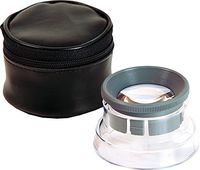
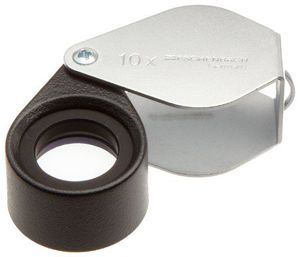
Eschenbach 1184-10 Hand-held Technical Achromatic Magnifier, 10x Magnification, 17mm Lens Diameter
The Eschenbach loupe magnifier has a compact 17mm diameter and a choice of magnification, and is used to enhance the size and resolution of an object or image for a variety of applications including jewelry-making, watch-making, electronic inspection, book-reading, and various hobbies. Achromatic lenses cemented together eliminate extraneous colors, providing an accurate depiction of an object. Two plano-convex lenses correct the image for distortion-free viewing side-to-side. Achromatic and aplanatic lenses work together to provide a magnified image that is free of distortion and color aberration. The black metal lens frame protects the optics from damage. The optics can be pivoted into the chrome-plated brass handle to protect the magnifier from damage while not in use.
Diopter (D) is a technical term for the measurement of the light curvature and thickness of a lens. A dioptric number and a magnification number are not the same thing. Diopter strength represents a specific magnification power (X). For example, a 5-diopter provides 2.5X magnification (at a distance of 8"). The higher the diopter, the more magnification a lens can provide. As magnification increases, distance to the object (focal length), and field of view (diameter, or narrowness of view) decrease. Magnifiers and prescription eyeglasses have a diopter value, such as 1.5 or 2. The dioptric strength of an accessory lens, such as prescription eyeglasses or an eye loupe, must be added to the dioptric strength of the magnifier to calculate total magnification.
Magnifiers are devices used to enlarge the visual appearance of an object or image. Magnifiers come in a variety of styles such as hand-held, headband, standing, clip-on, eye loupe, and those that hang in a necklace form, or fit in a trouser pocket. Magnifiers are commonly made of plastic or glass. They can have one or more lenses with varying magnification abilities, and can have a binocular configuration with
in next 2 weeks
By clicking "Accept All", you consent to our use of cookies.