Optics and Resolution
The impressive autofocus lens on the 2800 zooms a full 6x--from 38mm to 228mm. In addition, digital zoom of up to 2.5x is available, depending upon the image quality setting. If you're taking pictures at the highest resolution, digital zoom is disabled to preserve image quality, but if you're shooting at a lower resolution, then you'll be able to use some digital zoom, too.
The 2800's 2-megapixel sensor captures enough detail for sharp prints at sizes up to 8 by 10 inches. For most amateur photographers, 2 megapixels is a great balance between image quality and cost. Some photographers prefer higher-resolution sensors so they can crop away unwanted parts at the edges of their photos. Of course, these unwanted edges are often the result of a lens that can't zoom in far enough, a situation that's less likely to come up when you're using the 2800. If 2 megapixels isn't enough detail for you, the next higher-resolution camera that still has a long-zoom lens is the Minolta DiMAGE 5.
To compose your images, either use the 1.8-inch LCD display or the electronic viewfinder (EVF). An EVF looks like a traditional viewfinder, but when you put your eye up to it, you'll find that you're actually looking at a miniature LCD display. This is the same arrangement used by many camcorders, and it has its pluses and minuses compared to a traditional viewfinder. The benefit is that you get to see all the extra information that's normally displayed on the screen (battery condition, pictures remaining, any manual settings you've entered, etc). The problem is that EVFs aren't very effective in low-light situations, which means you'll be confronted with a view screen that's completely black when shooting at
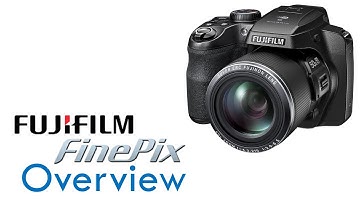
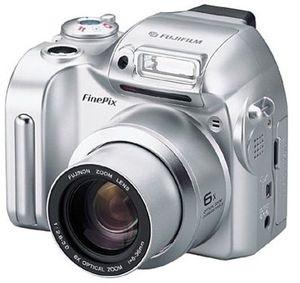
Fujifilm FinePix 2800 2MP Digital Camera w/ 6x Optical Zoom
Optics and Resolution
The impressive autofocus lens on the 2800 zooms a full 6x--from 38mm to 228mm. In addition, digital zoom of up to 2.5x is available, depending upon the image quality setting. If you're taking pictures at the highest resolution, digital zoom is disabled to preserve image quality, but if you're shooting at a lower resolution, then you'll be able to use some digital zoom, too.
The 2800's 2-megapixel sensor captures enough detail for sharp prints at sizes up to 8 by 10 inches. For most amateur photographers, 2 megapixels is a great balance between image quality and cost. Some photographers prefer higher-resolution sensors so they can crop away unwanted parts at the edges of their photos. Of course, these unwanted edges are often the result of a lens that can't zoom in far enough, a situation that's less likely to come up when you're using the 2800. If 2 megapixels isn't enough detail for you, the next higher-resolution camera that still has a long-zoom lens is the Minolta DiMAGE 5.
To compose your images, either use the 1.8-inch LCD display or the electronic viewfinder (EVF). An EVF looks like a traditional viewfinder, but when you put your eye up to it, you'll find that you're actually looking at a miniature LCD display. This is the same arrangement used by many camcorders, and it has its pluses and minuses compared to a traditional viewfinder. The benefit is that you get to see all the extra information that's normally displayed on the screen (battery condition, pictures remaining, any manual settings you've entered, etc). The problem is that EVFs aren't very effective in low-light situations, which means you'll be confronted with a view screen that's completely black when shooting at
in next 2 weeks