Description
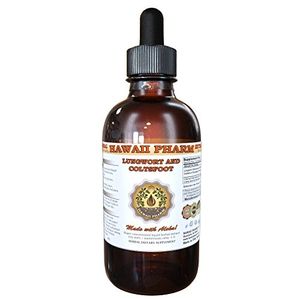
Lungwort also known as Pulmonaria officinalis, Spotted Lungwort, Jerusalem Cowslip, Oak Lungs, Lung Moss, Spotted Comfrey, Spotted Dog, Lugenkraut, and Sage of Bethlem. Lungwort is one of the first plants to flower in the early spring in its native habitats. Lungwort leaves can be eaten as a vegetable, either raw in salads, or cooked, but it is most often used in medicine for its expectorant and demulcent properties. Sometimes referred to as the \"Herb of Mary\", it was used as part of a formula to help reveal if someone was a witch or not, and also conversely it was worn as a protection against the evil eye. Lungwort grows wild throughout the Eastern United States and in its native Western Europe. It is distinguished by its spotted leaves and bright flowers that change color from rose to blue, with both colors often being found on the plant at the same time. Lungwort contains Catecholtannins, Silicic Acid, Allantoin, Saponins, Flavonoids, Quercetin, Kaempferol, Tannic Acid. Coltsfoot also known as Tussilago farfara, Horsehoof, Coughwort, Fieldhove, Bullsfoot, Cleats, Clayweed, Tusilago, and Ass?s Foot. Coltsfoot grows wild over much of Europe. The name is derived from the horseshoe shaped leaves. It was so popular in Europe at one time that French pharmacists painted its flowers on their doorposts. It was brought to the American colonies from Europe. American colonists were known to wrap persons afflicted with whooping cough in blankets that had been soaked with a coltsfoot infusion. Before the plant flowers, it resembles butterbur enough that old herbals caution against confusing the two. Coltsfoot contains mucilage, including numerous sugars; inulin; flavonoids, rutin, isoquercetin, tannin; pyrrolizidine alkaloids.




















![BOIRON USA - Lithium Carbonicum 200ck [Health and Beauty]](https://use4coins.com/thumbs/rs:fit:200:200/plain/https://images-na.ssl-images-amazon.com/images/I/31bgx34PQSL.jpg)