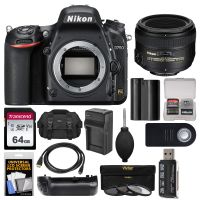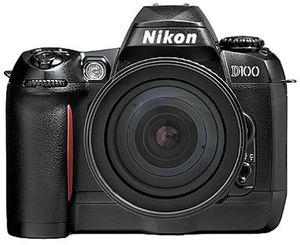
Styled around the more traditional N80, the D100 has a full-featured body, is nicely weighted and considerably lighter than you might expect, given the amount of technology that's packed into it. The controls are nicely situated, and navigating through the settings using the provided four-way movement pad becomes second nature very quickly. Picture preview comes courtesy of the built-in 1.8-inch LCD screen, which allows for a cursory check of any pictures taken. Unlike earlier Nikon products, it's not possible to use the screen on the D100 as an alternate viewfinder, restricting its use in tight situations, but the results through the "traditional" viewfinder are perfectly adequate.
As you would expect from a 6-megapixel camera, the image quality is superb at all levels, from the highest resolution (a mighty 3,008 x 2,000 pixels) down to a less intense 1,504 x 1,000 pixels. At any resolution, the output images are really very good, color saturation is well up to par, and overall the results stand up well. On the downside, perfectionists may well find there's a tiny amount less definition, but there's nothing here to raise anything approaching serious issues.
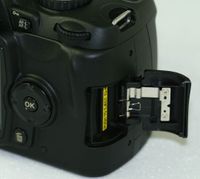
Power is provided from a supplied rechargeable battery pack, which is both light and long lasting--up to a maximum of two hours, depending on flash usage. To recharge from empty takes around two hours, so it would be worth investing in a second pack. The D100 takes Type I and II CompactFlash as well as Microdrive units, which are invaluable for users looking to take any more than a handful of pictures in a single session. Our tests showed a 256 MB CF card could handle around 40 high-resolution uncompressed TIFF images, suddenly making a 1 GB Microdrive look extremely attractive.
The bui
Nikon D100 DSLR Camera (Discontinued by Manufacturer)
Styled around the more traditional N80, the D100 has a full-featured body, is nicely weighted and considerably lighter than you might expect, given the amount of technology that's packed into it. The controls are nicely situated, and navigating through the settings using the provided four-way movement pad becomes second nature very quickly. Picture preview comes courtesy of the built-in 1.8-inch LCD screen, which allows for a cursory check of any pictures taken. Unlike earlier Nikon products, it's not possible to use the screen on the D100 as an alternate viewfinder, restricting its use in tight situations, but the results through the "traditional" viewfinder are perfectly adequate.
As you would expect from a 6-megapixel camera, the image quality is superb at all levels, from the highest resolution (a mighty 3,008 x 2,000 pixels) down to a less intense 1,504 x 1,000 pixels. At any resolution, the output images are really very good, color saturation is well up to par, and overall the results stand up well. On the downside, perfectionists may well find there's a tiny amount less definition, but there's nothing here to raise anything approaching serious issues.
Power is provided from a supplied rechargeable battery pack, which is both light and long lasting--up to a maximum of two hours, depending on flash usage. To recharge from empty takes around two hours, so it would be worth investing in a second pack. The D100 takes Type I and II CompactFlash as well as Microdrive units, which are invaluable for users looking to take any more than a handful of pictures in a single session. Our tests showed a 256 MB CF card could handle around 40 high-resolution uncompressed TIFF images, suddenly making a 1 GB Microdrive look extremely attractive.
The bui
in next 2 weeks