Optics and Resolution
Featuring a 5.5-megapixel Full-Frame Transfer CCD (FT-CCD) sensor, the E1 delivers a wide range of detail and color (with images up to 2560 by 1920 pixels) in both TIFF and Raw formats. The FT-CCD is a Progressive scan sensor that provides more image capturing surface area than traditional interline CCDs. Olympus claims this type of sensor accounts for more accurate color sensitivity, a higher dynamic range from black to white, and a higher signal-to-noise ratio than most other cameras in its class.
| |
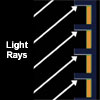
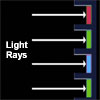
| With a traditional 35mm lens, light hits the periphery of the image area at oblique angles. This is not a problem with the flat surface of film, but diodes inside image-sensor light wells need direct light paths (see above, left). Because the Four Thirds System uses a lens mount that is about twice the size of the camera's image circle, light is more likely travel straight into the wells (right). | |
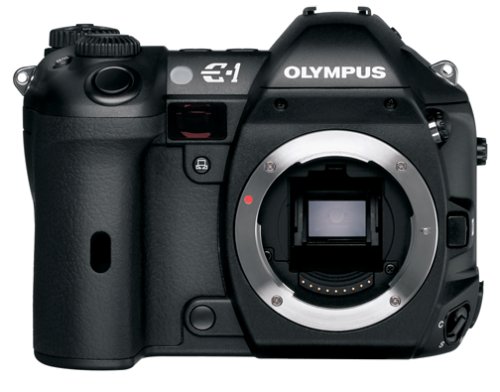
Olympus E1 5.5MP Digital SLR Camera (Body Only)
Optics and Resolution
Featuring a 5.5-megapixel Full-Frame Transfer CCD (FT-CCD) sensor, the E1 delivers a wide range of detail and color (with images up to 2560 by 1920 pixels) in both TIFF and Raw formats. The FT-CCD is a Progressive scan sensor that provides more image capturing surface area than traditional interline CCDs. Olympus claims this type of sensor accounts for more accurate color sensitivity, a higher dynamic range from black to white, and a higher signal-to-noise ratio than most other cameras in its class.
| |
| With a traditional 35mm lens, light hits the periphery of the image area at oblique angles. This is not a problem with the flat surface of film, but diodes inside image-sensor light wells need direct light paths (see above, left). Because the Four Thirds System uses a lens mount that is about twice the size of the camera's image circle, light is more likely travel straight into the wells (right). | |
in next 2 weeks