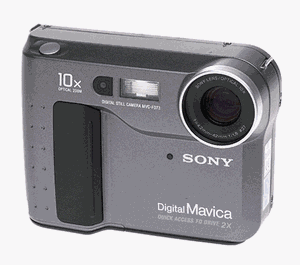
Sony deserves much of the credit for bringing digital photography to the masses. Americans have purchased more Mavicas than any other line of digital camera--and with good reason. The Mavicas feature high-quality optics and excellent battery life in an easy-to-use package. Yet the camera's biggest asset--floppy-disk image storage--is also its biggest liability. In some ways, floppy disks are great: they're inexpensive and available virtually everywhere, and transferring images to your computer is a snap--just pop the disk into your PC's floppy drive. Floppies act as both "film" (for recording the image) and "negatives" (for archiving your shots), saving the expense of the CD recorder most digital camera owners eventually purchase for long-term image storage.
On the other hand, floppies and floppy drives are big, making Mavicas some of the bulkiest of digital cameras. In addition, disks have moving parts and tend to be more prone to failure than solid-state memory. But the biggest problem with floppy disks is that they hold only 1.44 MB of information--a fraction the capacity of the solid-state cards most cameras use.
To compensate for this shortcoming in storage capacity (and to keep prices low), Sony uses a lower-resolution image sensor (640 x 480 pixels, or 0.3 megapixels) and higher levels of compression than you'll find on other similarly priced cameras. The resulting images look great as e-mailed attachments or on a Web site but lack the detail to produce quality prints at sizes beyond 3 by 5 inches.
With the exception of the low resolution, the MVC-FD73 Mavica is a great digital camera. Its 10x optical zoom lens is more powerful than that of any other camera in its price range. Compared to most other digital cameras, its battery life is fantastic, and the InfoLithium system even displays an estimate of remaining battery charge (in minutes). Sony includes a battery and charger (many manufacturers don't). The big 2.5-inch LCD screen is bright and




![Casio Exilim High Speed EX-TR60 Self-portrait/Selfie Digital Camera (Vivid Pink) [Limited Edition] - International Version (No Warranty)](https://use4coins.com/thumbs/unsafe/fit-in/200x200/https://images-na.ssl-images-amazon.com/images/I/41qMNLqgf8L.jpg)