Optics and Resolution
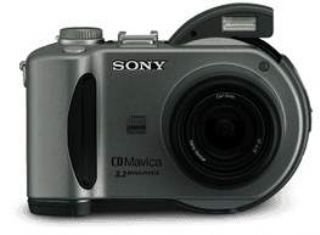
The CD300's 3-megapixel sensor captures ample detail for sharp prints at sizes up to 8 by 10 inches. For a serious amateur photographer, 3 megapixels is a great resolution, providing enough detail to perform some cropping and still have crisp prints.
A 3x optical zoom Carl Zeiss lens (34-102mm equivalent) helps you to capture exactly the picture you want, and an additional 2x digital zoom (6x total) further magnifies your image. Remember, however, that digital zoom tends to reduce the sharpness and detail of your image, so it's best used sparingly. In low-light situations (a particular weakness of many digital cameras), a focus-assist lamp sends out a small patterned beam to help the camera accurately determine distance.
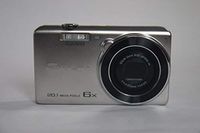
To save space, there's no traditional optical viewfinder to look through. Instead, to compose images or review shots you've already taken, the CD300 uses a big 2.5-inch color display. The advantage of using the LCD to frame your shots is that the screen lets you see exactly the picture you'll be capturing. The disadvantage is that you can't turn off the screen and just use the optical viewfinder to extend battery life. Fortunately, the included rechargeable battery holds a relatively good charge.
More Features
The engineers at Sony have gone out of their way to make it as easy as possible to share your images online. For example, e-mail mode stores a lower-resolution version of your picture on the disc in a separate folder than the full-size version. This compact file lacks the detail of the original, but the smaller size makes it ideal for attaching to e-mail. In addition, a vide
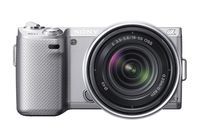
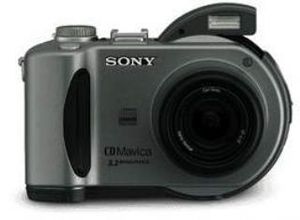
Sony MVCCD300 3MP Digital Camera with 3x Optical Zoom
Optics and Resolution
The CD300's 3-megapixel sensor captures ample detail for sharp prints at sizes up to 8 by 10 inches. For a serious amateur photographer, 3 megapixels is a great resolution, providing enough detail to perform some cropping and still have crisp prints.
A 3x optical zoom Carl Zeiss lens (34-102mm equivalent) helps you to capture exactly the picture you want, and an additional 2x digital zoom (6x total) further magnifies your image. Remember, however, that digital zoom tends to reduce the sharpness and detail of your image, so it's best used sparingly. In low-light situations (a particular weakness of many digital cameras), a focus-assist lamp sends out a small patterned beam to help the camera accurately determine distance.
To save space, there's no traditional optical viewfinder to look through. Instead, to compose images or review shots you've already taken, the CD300 uses a big 2.5-inch color display. The advantage of using the LCD to frame your shots is that the screen lets you see exactly the picture you'll be capturing. The disadvantage is that you can't turn off the screen and just use the optical viewfinder to extend battery life. Fortunately, the included rechargeable battery holds a relatively good charge.
More Features
The engineers at Sony have gone out of their way to make it as easy as possible to share your images online. For example, e-mail mode stores a lower-resolution version of your picture on the disc in a separate folder than the full-size version. This compact file lacks the detail of the original, but the smaller size makes it ideal for attaching to e-mail. In addition, a vide
in next 2 weeks