- HomeElectronicsCamera & PhotoBinoculars & ScopesMicroscopesCompound MicroscopesCompound Monocular Microscopes
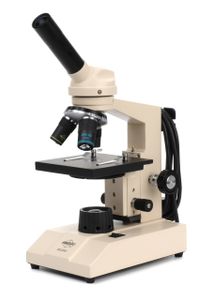
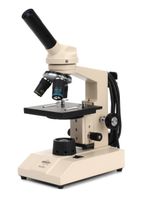
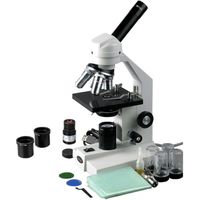
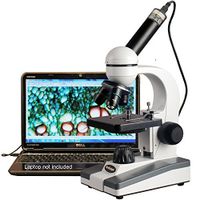
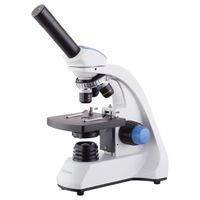
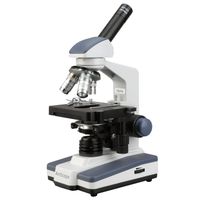
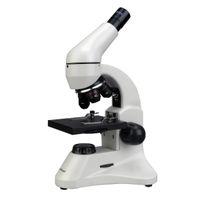
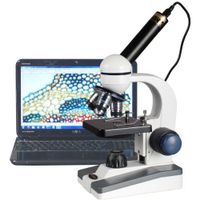
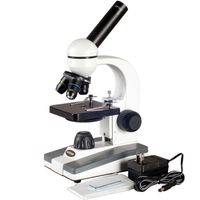
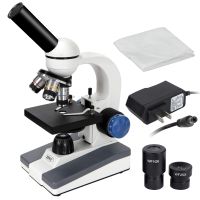
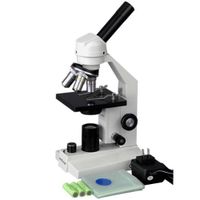
The Swift Optical M2251C Basic Monocular Compound Microscope has a 10x widefield eyepiece with pointer, a forward-facing nosepiece with three DIN achromatic objectives that are parcentered and parfocal, LED illumination, separate coarse and fine focus, a 0.65 NA condenser with iris diaphragm, and a plain stage with stage clips. The monocular viewing head has a fixed inclination to reduce eye and neck strain, and 360-degree rotation capability to enable sharing. An eyepiece pointer is used to identify features for students. A forward-facing nosepiece eases changing objectives. Achromatic objectives provide color correction of magnified images. Parcentered and parfocal objectives ensure that the image stays centered and focused when the magnification is changed. The 40xR objective is retractable and spring-loaded to prevent damage to the slide or objective when focusing, and is sealed to protect against liquids and oils. A basic compound microscope is used in classroom, home school, and hobbyist settings for inspection and dissection of specimens when two-dimensional images are desired.
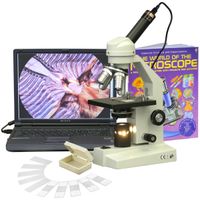
The microscope has lower (diascopic) Brightfield illumination that transmits light up through the specimen for enhanced visibility of translucent and transparent objects. Brightfield (BF) illumination allows the specimen to absorb light, resulting in a dark image on a light background. The LED light source provides bright, cool light for working with temperature-sensitive or live specimens, and operates on rechargeable batteries for cordless operation. The plain stage has an opening for light transmission, stage clips to secure the slide or specimen in place while viewing, and pre-drilled holes that accept a mechanical stage (sold separately). An iris diaphragm optimizes the amount of light illuminating the specimen. Separate coarse and fine focus knobs speed focusing. A slip clutch prevents excess pressure from damaging the slides or objectives, a stage st
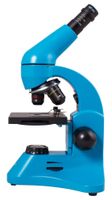
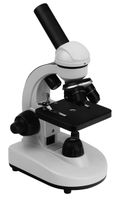
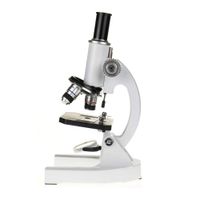
Swift Optical M2251C Basic Monocular Compound Microscope, WF10x Eyepiece, 40x-400x Magnification, Brightfield, LED Illumination, Iris Diaphragm, Plain Stage, 110V or Battery-Powered
The Swift Optical M2251C Basic Monocular Compound Microscope has a 10x widefield eyepiece with pointer, a forward-facing nosepiece with three DIN achromatic objectives that are parcentered and parfocal, LED illumination, separate coarse and fine focus, a 0.65 NA condenser with iris diaphragm, and a plain stage with stage clips. The monocular viewing head has a fixed inclination to reduce eye and neck strain, and 360-degree rotation capability to enable sharing. An eyepiece pointer is used to identify features for students. A forward-facing nosepiece eases changing objectives. Achromatic objectives provide color correction of magnified images. Parcentered and parfocal objectives ensure that the image stays centered and focused when the magnification is changed. The 40xR objective is retractable and spring-loaded to prevent damage to the slide or objective when focusing, and is sealed to protect against liquids and oils. A basic compound microscope is used in classroom, home school, and hobbyist settings for inspection and dissection of specimens when two-dimensional images are desired.
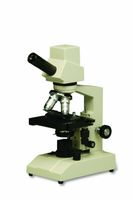
The microscope has lower (diascopic) Brightfield illumination that transmits light up through the specimen for enhanced visibility of translucent and transparent objects. Brightfield (BF) illumination allows the specimen to absorb light, resulting in a dark image on a light background. The LED light source provides bright, cool light for working with temperature-sensitive or live specimens, and operates on rechargeable batteries for cordless operation. The plain stage has an opening for light transmission, stage clips to secure the slide or specimen in place while viewing, and pre-drilled holes that accept a mechanical stage (sold separately). An iris diaphragm optimizes the amount of light illuminating the specimen. Separate coarse and fine focus knobs speed focusing. A slip clutch prevents excess pressure from damaging the slides or objectives, a stage st

in next 2 weeks


By clicking "Accept All", you consent to our use of cookies.