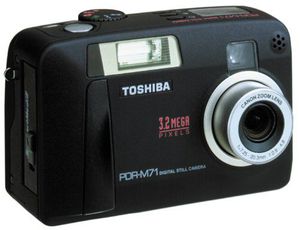
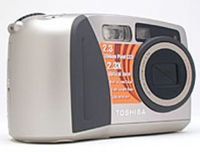
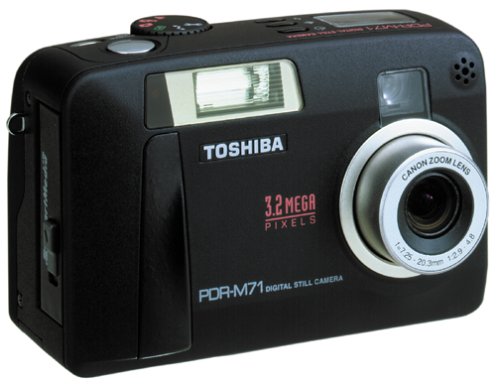
Toshiba's high-peformance PDR-M71 digital camera combines 3-megapixel clarity with an optical zoom lens and a full complement of features, making it a great choice for both beginners and advanced amateur photographers. For photographers who want to do more than just point and shoot, the camera offers numerous advanced settings, including aperture- and shutter-priority modes, shutter speeds as slow as 15 seconds, a multimode flash, adjustable white balance, exposure compensation, and macro (for objects as little as four inches from the lens). Shots can be captured in black and white, sepia, vivid color, or standard color.
For power, the camera uses four AA batteries or an optional AC adapter. The big benefit to using standard AA batteries instead of a custom proprietary battery is that AA batteries are available virtually everywhere in the world, so missing a once-in-a-lifetime shot due to dead batteries won't be an issue. The downside is that a digital camera will kill a set of alkaline batteries extremely quickly, especially if you're using the camera's LCD display. If you're an occasional photographer, you can get by with high-power disposables, but if you plan to take more than a handful of photos a month, a set of rechargeable batteries (scroll up to the Accessories section) is a virtual necessity.
To compose your image, either look through the traditional viewfinder or use the 1.5-inch color LCD display on the back of the camera. Pictures are stored on SmartMedia cards. The included 8 MB card holds nine images at the camera's default setting or six images in the highest-quality (least compressed) setting. The card is reusable, but if you're hoping to take more photos before returning to your computer to transfer the images, you'll want a larger SmartMedia card.
In addition to its 2.8x optical zoom, the camera includes an additional 2.2x digital zoom. This feature merely crops the edges off your picture and blows up the remaining image, enlarging you