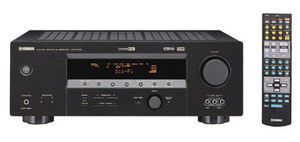
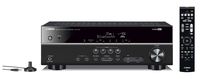
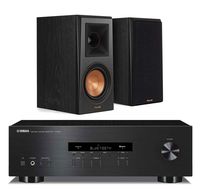
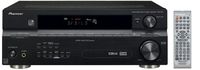
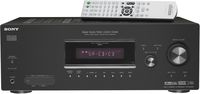
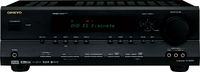
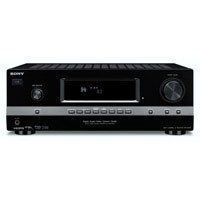
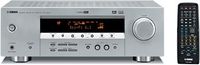
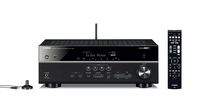
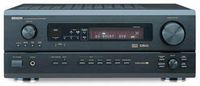
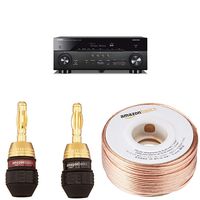
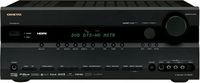
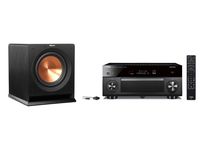
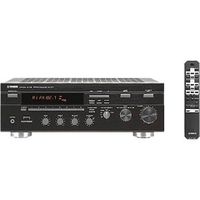
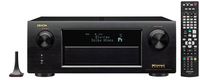
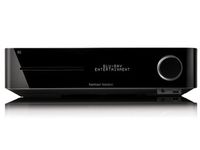
For high-quality, future-ready home theater on a budget, look no further than Yamaha's HTR-5740 audio/video receiver. The HTR-5740 offers the convenience of DVD-Audio/SACD-ready analog inputs alongside the latest 6.1-channel surround processing and premium Yamaha sound technologies. Finished in traditional black, the receiver will disappear in your darkened living room during movies. When hooked up with the digital-audio output from a DVD-Video player or digital satellite receiver, the 85-watts-per-channel HTR-5740 handles 5.1-channel surround decoding for both major formats, Dolby Digital and DTS. In addition, the receiver processes Dolby Digital EX, Dolby Pro Logic IIx, DTS Neo:6, DTS-ES Matrix 6.1, and DTS-EX Discrete 6.1. The extended-surround formats create even more expansive soundfields through a center-rear channel, resulting in six discrete, full-range signals in addition to the LFE (low-frequency effects) channel: front left/right, surround left/right, and front/rear center channels.
A key benefit from a Yamaha receiver, of course, is Yamaha's proprietary signal processing, including Cinema DSP (digital soundfield processing), which creates aural "imaging" that not only makes your home sound like a theater, but also sounds better than most movie theaters. Based on a wealth of measured data in real studios and halls, Cinema DSP is designed to bring out the full potential of movie sound mixes, reproducing them the way directors and sound engineers intended.
Non-Dolby Digital and DTS sources can benefit from surround processing, too. With enhanced directional steering over standard four-channel Dolby Pro Logic, Dolby Pro Logic II provides 5.1 channels of surround processing from any stereo source--whether that's a TV broadcast, VHS tapes, or your favorite CDs, cassettes, and LPs.
And, when you're listening to multichannel presentations late at night, you'll appreciate Silent Cinema, which simulates 5.1-channel listening through a pair of ordinary