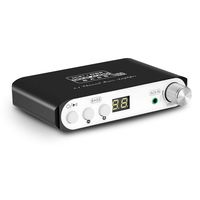
Description
We all live in a society obsessed by brand names and the latest gadget. Sometimes with reason sometimes with none. The RPI has one major problem with audio. The clocks coming from CPU can only output one frequency clock perfect (very close), resulting in major problems with audio files sampled at 44Khz (and multiple). Too much jitter on i2s clocks. So we invented the Kali but there is a second way.
Enter the master mode for i2s. Instead of the RPI giving the clock on the line, the DAC itself sends the clocks and RPI sends the data (file to be played). Since we used 2 clocks the problem above disappears. Ours is not the first master DAC on the market, there are others... read on.
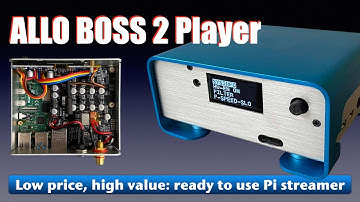
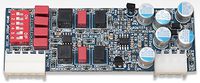
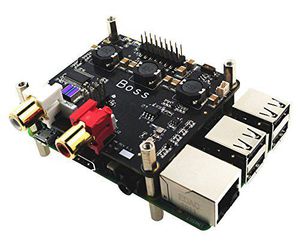
Our BOSS DAC is unique, because of the way we have implemented the design. First we separate the power on 3 channels and filter it: one for the digital side, the second for analog and third for the clocks themselves. Then we take the filtered power and use a second filter (LDOs) to further quiet the noise. Note that we use some of the best LDOs on the market (LT3042 from Linear). In addition, we use Japanese oscillators from NDK for a very low jitter clock - almost as good as famous Crystek.
Finally, on the analog stage we are using a film capacitor (not ceramic) for a quiet DC to feed the TI IC (ceramic exhibit some piezo distortion, not what you want in analog stage). Not happy with this, we have added a supercapacitor for an extra kick when analog stage is asking (like deep bass).
What we have achieved, in our opinion, is the best analog implementation of the PCM5122 on the market, while at same time correcting the clock problem from RPI. Yes we live in a society obsessed with the latest gadgets. The BOSS however, is a very solid implementation of the PCM IC that will give you the greatest bang for your buck. It will sound great no matter what you throw at it - this was our goal and promise to you.
Enter the master mode for i2s. Instead of the RPI giving the clock on the line, the DAC itself sends the clocks and RPI sends the data (file to be played). Since we used 2 clocks the problem above disappears. Ours is not the first master DAC on the market, there are others... read on.
Our BOSS DAC is unique, because of the way we have implemented the design. First we separate the power on 3 channels and filter it: one for the digital side, the second for analog and third for the clocks themselves. Then we take the filtered power and use a second filter (LDOs) to further quiet the noise. Note that we use some of the best LDOs on the market (LT3042 from Linear). In addition, we use Japanese oscillators from NDK for a very low jitter clock - almost as good as famous Crystek.
Finally, on the analog stage we are using a film capacitor (not ceramic) for a quiet DC to feed the TI IC (ceramic exhibit some piezo distortion, not what you want in analog stage). Not happy with this, we have added a supercapacitor for an extra kick when analog stage is asking (like deep bass).
What we have achieved, in our opinion, is the best analog implementation of the PCM5122 on the market, while at same time correcting the clock problem from RPI. Yes we live in a society obsessed with the latest gadgets. The BOSS however, is a very solid implementation of the PCM IC that will give you the greatest bang for your buck. It will sound great no matter what you throw at it - this was our goal and promise to you.
Boss DAC
Price is below average
Current Price
$59.99
Average
$62.21
Min Price
$59.99
Max Price
$79.99
Price dynamics
4%
Description
We all live in a society obsessed by brand names and the latest gadget. Sometimes with reason sometimes with none. The RPI has one major problem with audio. The clocks coming from CPU can only output one frequency clock perfect (very close), resulting in major problems with audio files sampled at 44Khz (and multiple). Too much jitter on i2s clocks. So we invented the Kali but there is a second way.
Enter the master mode for i2s. Instead of the RPI giving the clock on the line, the DAC itself sends the clocks and RPI sends the data (file to be played). Since we used 2 clocks the problem above disappears. Ours is not the first master DAC on the market, there are others... read on.
Our BOSS DAC is unique, because of the way we have implemented the design. First we separate the power on 3 channels and filter it: one for the digital side, the second for analog and third for the clocks themselves. Then we take the filtered power and use a second filter (LDOs) to further quiet the noise. Note that we use some of the best LDOs on the market (LT3042 from Linear). In addition, we use Japanese oscillators from NDK for a very low jitter clock - almost as good as famous Crystek.
Finally, on the analog stage we are using a film capacitor (not ceramic) for a quiet DC to feed the TI IC (ceramic exhibit some piezo distortion, not what you want in analog stage). Not happy with this, we have added a supercapacitor for an extra kick when analog stage is asking (like deep bass).
What we have achieved, in our opinion, is the best analog implementation of the PCM5122 on the market, while at same time correcting the clock problem from RPI. Yes we live in a society obsessed with the latest gadgets. The BOSS however, is a very solid implementation of the PCM IC that will give you the greatest bang for your buck. It will sound great no matter what you throw at it - this was our goal and promise to you.
Enter the master mode for i2s. Instead of the RPI giving the clock on the line, the DAC itself sends the clocks and RPI sends the data (file to be played). Since we used 2 clocks the problem above disappears. Ours is not the first master DAC on the market, there are others... read on.
Our BOSS DAC is unique, because of the way we have implemented the design. First we separate the power on 3 channels and filter it: one for the digital side, the second for analog and third for the clocks themselves. Then we take the filtered power and use a second filter (LDOs) to further quiet the noise. Note that we use some of the best LDOs on the market (LT3042 from Linear). In addition, we use Japanese oscillators from NDK for a very low jitter clock - almost as good as famous Crystek.
Finally, on the analog stage we are using a film capacitor (not ceramic) for a quiet DC to feed the TI IC (ceramic exhibit some piezo distortion, not what you want in analog stage). Not happy with this, we have added a supercapacitor for an extra kick when analog stage is asking (like deep bass).
What we have achieved, in our opinion, is the best analog implementation of the PCM5122 on the market, while at same time correcting the clock problem from RPI. Yes we live in a society obsessed with the latest gadgets. The BOSS however, is a very solid implementation of the PCM IC that will give you the greatest bang for your buck. It will sound great no matter what you throw at it - this was our goal and promise to you.
Price will be lower
in next 2 weeks
in next 2 weeks
According to the data, price will be lower in next two weeks, so not waste your money and track better price!
Product review & video
you want an affordable yet good sounding streamer at about 215 euros the allo boss 2 player is certainly affordable but what about the sound quality like most allo products the boss 2 player is raspberry pi based in this case a type 4b 2 gigabyte the player version is the ready to use version of the boss 2 dark board and the configuration i review here has the aluminium housing and includes a 16 gigabyte micro sd card holding the software of your choice and the allo nirvana low noise switch mode power supply i ordered mode as player software and also tried allo's top power supply the boss player is connected to a line input on an amplifier over a set of rca cables you could use the cd input or for instance aux or tuner it needs to be connected to your home network too using the so called utp network cable if you want to use wi-fi instead it is advised to use an external wi-fi dongle whi