Description
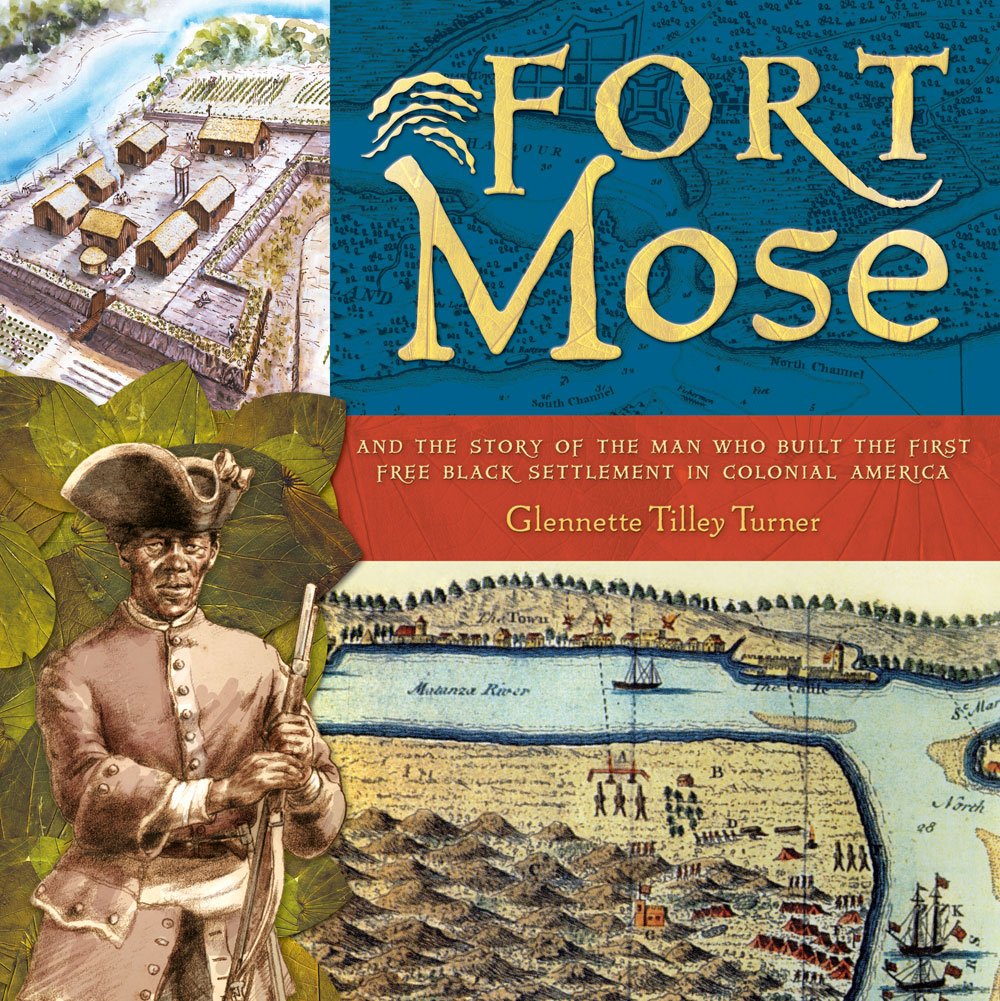
In this one-of-a-kind historical picture book, author Glennette Tilley Turner tells the story of Fort Mose, which was founded in St. Augustine, Florida, and was the first free African settlement to legally exist in what later became the United States. Fort Mose was not only the first free black settlement, but it was also the most southern link of the Underground Railroad as a haven of refuge, just as cities in Canada were the northern most link.
Beginning with the story of Francisco Menendez, the Captain of the Black Militia of St. Augustine, FORT MOSE follows the history of slavery from West Africa to America, recounts what daily life was like, and describes the founding of the Spanish colony’s Fort Mose. Established in 1738, Fort Mose gave sanctuary to escaped Africans, challenging slavery in the English colonies. Approximately one hundred Africans lived together, creating a frontier community that drew on a range of African backgrounds, blending them with those of Spanish, Native American, and English people and cultural traditions.
The book includes more than forty archival images, an afterword about uncovering Fort Mose (which is now part of the National Parks), a glossary, an author’s note, a bibliography, and an index.
Praise for Fort Mose
Starred Review:
"Turner’s graceful account clearly distinguishes between fact and supposition. The paragraphs discussing the transport of slaves and their treatment at the “pest” house on Sullivan’s Island are particularly vivid and informative. Brightening every page of this large, handsome book are deep-green borders of tropical leaves. A significant addition to African American history collections for young people. –Booklist, starred review
"This is a useful addition to libraries with strong African-American history collections, and for teachers and librarians looking for unique stories about colonial America." –School Library Journal
Beginning with the story of Francisco Menendez, the Captain of the Black Militia of St. Augustine, FORT MOSE follows the history of slavery from West Africa to America, recounts what daily life was like, and describes the founding of the Spanish colony’s Fort Mose. Established in 1738, Fort Mose gave sanctuary to escaped Africans, challenging slavery in the English colonies. Approximately one hundred Africans lived together, creating a frontier community that drew on a range of African backgrounds, blending them with those of Spanish, Native American, and English people and cultural traditions.
The book includes more than forty archival images, an afterword about uncovering Fort Mose (which is now part of the National Parks), a glossary, an author’s note, a bibliography, and an index.
Praise for Fort Mose
Starred Review:
"Turner’s graceful account clearly distinguishes between fact and supposition. The paragraphs discussing the transport of slaves and their treatment at the “pest” house on Sullivan’s Island are particularly vivid and informative. Brightening every page of this large, handsome book are deep-green borders of tropical leaves. A significant addition to African American history collections for young people. –Booklist, starred review
"This is a useful addition to libraries with strong African-American history collections, and for teachers and librarians looking for unique stories about colonial America." –School Library Journal
Fort Mose: And the Story of the Man Who Built the First Free Black Settlement in Colonial America
Current Price
$18.95
Average
$14.72
Min Price
$10.04
Max Price
$18.95
Price dynamics
22%
Description
In this one-of-a-kind historical picture book, author Glennette Tilley Turner tells the story of Fort Mose, which was founded in St. Augustine, Florida, and was the first free African settlement to legally exist in what later became the United States. Fort Mose was not only the first free black settlement, but it was also the most southern link of the Underground Railroad as a haven of refuge, just as cities in Canada were the northern most link.
Beginning with the story of Francisco Menendez, the Captain of the Black Militia of St. Augustine, FORT MOSE follows the history of slavery from West Africa to America, recounts what daily life was like, and describes the founding of the Spanish colony’s Fort Mose. Established in 1738, Fort Mose gave sanctuary to escaped Africans, challenging slavery in the English colonies. Approximately one hundred Africans lived together, creating a frontier community that drew on a range of African backgrounds, blending them with those of Spanish, Native American, and English people and cultural traditions.
The book includes more than forty archival images, an afterword about uncovering Fort Mose (which is now part of the National Parks), a glossary, an author’s note, a bibliography, and an index.
Praise for Fort Mose
Starred Review:
"Turner’s graceful account clearly distinguishes between fact and supposition. The paragraphs discussing the transport of slaves and their treatment at the “pest” house on Sullivan’s Island are particularly vivid and informative. Brightening every page of this large, handsome book are deep-green borders of tropical leaves. A significant addition to African American history collections for young people. –Booklist, starred review
"This is a useful addition to libraries with strong African-American history collections, and for teachers and librarians looking for unique stories about colonial America." –School Library Journal
Beginning with the story of Francisco Menendez, the Captain of the Black Militia of St. Augustine, FORT MOSE follows the history of slavery from West Africa to America, recounts what daily life was like, and describes the founding of the Spanish colony’s Fort Mose. Established in 1738, Fort Mose gave sanctuary to escaped Africans, challenging slavery in the English colonies. Approximately one hundred Africans lived together, creating a frontier community that drew on a range of African backgrounds, blending them with those of Spanish, Native American, and English people and cultural traditions.
The book includes more than forty archival images, an afterword about uncovering Fort Mose (which is now part of the National Parks), a glossary, an author’s note, a bibliography, and an index.
Praise for Fort Mose
Starred Review:
"Turner’s graceful account clearly distinguishes between fact and supposition. The paragraphs discussing the transport of slaves and their treatment at the “pest” house on Sullivan’s Island are particularly vivid and informative. Brightening every page of this large, handsome book are deep-green borders of tropical leaves. A significant addition to African American history collections for young people. –Booklist, starred review
"This is a useful addition to libraries with strong African-American history collections, and for teachers and librarians looking for unique stories about colonial America." –School Library Journal
Price will be lower
in next 2 weeks
in next 2 weeks
According to the data, price will be lower in next two weeks, so not waste your money and track better price!
Product review & video
in the late 1600s rival imperial powers spain and england shared a border near what became south carolina georgia and florida any slave who escaped to florida from the british colonies was granted their freedom for the enslaved spanish florida became the first promised land in 1738 a small group of black people created their own town near saint augustine they called it fort mosay the first all-black settlement in what is now the united states enslaved folk in south carolina realize that if they reach florida that is not controlled by the english perhaps they can seek refuge 300 miles north of fort mosaic near the stono river just outside of charleston word of the free town to the south reached a group of slaves this inspired one of the largest slave revolts in the history of the british colonies one morning in 1739 a group of about 20 black men set out before dawn as they traveled they