Description
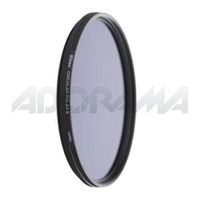
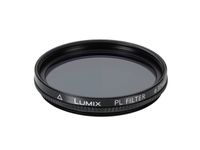
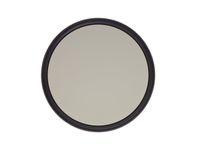
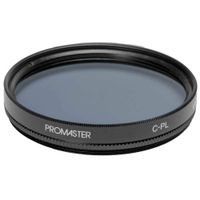
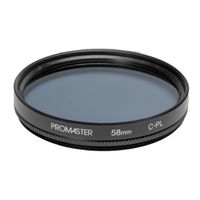
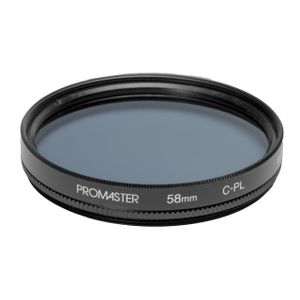
ProMaster 58mm Circular Polarizing Filter
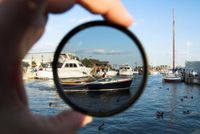
Light rays which are reflected by any surface become polarized and Polarizing filters are used to select which light rays enter your camera lens. They allow you to remove unwanted reflections from non-metallic surfaces such as water, glass etc. They also enable colors to become more saturated and appear clearer, with better contrast. This effect is often used to increase the contrast and saturation in blue skies and white clouds.
Polarizers do not affect the overall color balance of a shot, however, it is important that you choose the correct version of polarizer for your camera. Many of today's cameras use semi-silvered mirrors or prisms to split the light entering the viewfinder in order to calculate exposure and focusing distance. Polarizing filters can sometimes interact with these items to give unpredictable exposure or focusing. So we recommend that you choose a circular polarizer unless you have a manual focus camera which has no beam splitter. If you will be using your Polarizing filter on a lens which has a focal length of 28mm or wider (on a 35mm camera), we recommend that you use a Wide Circular Polarizer to avoid a possible vignette effect.
Light rays which are reflected by any surface become polarized and Polarizing filters are used to select which light rays enter your camera lens. They allow you to remove unwanted reflections from non-metallic surfaces such as water, glass etc. They also enable colors to become more saturated and appear clearer, with better contrast. This effect is often used to increase the contrast and saturation in blue skies and white clouds.
Polarizers do not affect the overall color balance of a shot, however, it is important that you choose the correct version of polarizer for your camera. Many of today's cameras use semi-silvered mirrors or prisms to split the light entering the viewfinder in order to calculate exposure and focusing distance. Polarizing filters can sometimes interact with these items to give unpredictable exposure or focusing. So we recommend that you choose a circular polarizer unless you have a manual focus camera which has no beam splitter. If you will be using your Polarizing filter on a lens which has a focal length of 28mm or wider (on a 35mm camera), we recommend that you use a Wide Circular Polarizer to avoid a possible vignette effect.
ProMaster 58mm Circular Polarizing Filter (7202)
Price is below average
Current Price
$24.31
Average
$31.8
Min Price
$6
Max Price
$39.95
Price dynamics
24%
Description
ProMaster 58mm Circular Polarizing Filter
Light rays which are reflected by any surface become polarized and Polarizing filters are used to select which light rays enter your camera lens. They allow you to remove unwanted reflections from non-metallic surfaces such as water, glass etc. They also enable colors to become more saturated and appear clearer, with better contrast. This effect is often used to increase the contrast and saturation in blue skies and white clouds.
Polarizers do not affect the overall color balance of a shot, however, it is important that you choose the correct version of polarizer for your camera. Many of today's cameras use semi-silvered mirrors or prisms to split the light entering the viewfinder in order to calculate exposure and focusing distance. Polarizing filters can sometimes interact with these items to give unpredictable exposure or focusing. So we recommend that you choose a circular polarizer unless you have a manual focus camera which has no beam splitter. If you will be using your Polarizing filter on a lens which has a focal length of 28mm or wider (on a 35mm camera), we recommend that you use a Wide Circular Polarizer to avoid a possible vignette effect.
Light rays which are reflected by any surface become polarized and Polarizing filters are used to select which light rays enter your camera lens. They allow you to remove unwanted reflections from non-metallic surfaces such as water, glass etc. They also enable colors to become more saturated and appear clearer, with better contrast. This effect is often used to increase the contrast and saturation in blue skies and white clouds.
Polarizers do not affect the overall color balance of a shot, however, it is important that you choose the correct version of polarizer for your camera. Many of today's cameras use semi-silvered mirrors or prisms to split the light entering the viewfinder in order to calculate exposure and focusing distance. Polarizing filters can sometimes interact with these items to give unpredictable exposure or focusing. So we recommend that you choose a circular polarizer unless you have a manual focus camera which has no beam splitter. If you will be using your Polarizing filter on a lens which has a focal length of 28mm or wider (on a 35mm camera), we recommend that you use a Wide Circular Polarizer to avoid a possible vignette effect.
Price will be lower
in next 2 weeks
in next 2 weeks
According to the data, price will be lower in next two weeks, so not waste your money and track better price!
Similar products