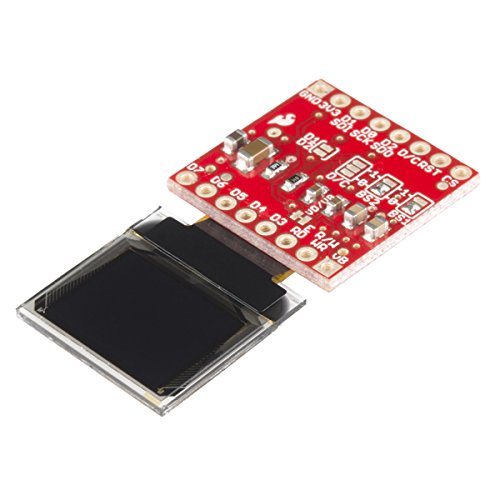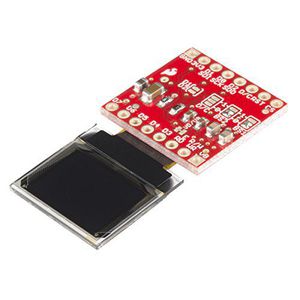
SparkFun Micro OLED Breakout
Current Price
$18.95
Average
$17.08
Min Price
$13.46
Max Price
$18.95
Price dynamics
10%
Price will be lower
in next 2 weeks
in next 2 weeks
According to the data, price will be lower in next two weeks, so not waste your money and track better price!
Product review & video
this is the new micro LED breakout it's a breakout board that makes it easy to use our small organic LED screens which you might recognize from the micro view there are 48 by 96 pixels in resolution and because they're a no LED they actually produce their own lights so they don't need to be backlit the way that say an LCD would need to be we've made it pretty easy to interface with you can either use SPI or I squared C and the breakout board takes care of all those pins and puts them on point one inch space headers so that you can pop it directly into your breadboard and hook it to an Arduino I have this one connected to one of our Maker Faire fair game badges which if you are lucky enough to see us at New York or world Maker Faire Rome you may have gotten to put one of these together it's basically just an Arduino Pro Mini running at 3.3 volts and I've hooked it up according to the hoo







![MARETRON Temperature Sensor Module NMEA 2000 [MRTN-TMP100-01]](https://use4coins.com/thumbs/unsafe/fit-in/200x200/https://images-na.ssl-images-amazon.com/images/I/5160IOlm9lL.jpg)