Description
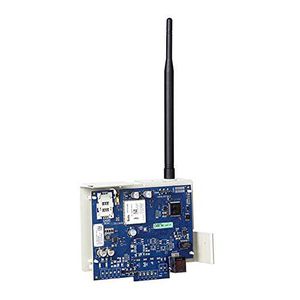
The TL2803G(R)E Internet and HSPA Dual-Path Alarm Communicator is a complete, integrated communication solution by DSC, offering the next level in alarm signal delivery As traditional phone lines become less common and more users choose VoIP or mobile phones, it is essential to provide alternate methods of alarm communication. DSC's TL2803G(R)E Internet and HSPA Dual-Path Alarm Communicator conveniently utilizes the existing Internet connection and the Cellular connection to ensure high speed and reliable alarm communications making it an ideal solution for both residential and small-to-medium business environments. When connected to a DSC HS2016/ HS2032/ HS2064/ HS2128 control panel, customers have the option to combine alarm reporting paths through Public Switched Telephone Network (PSTN), Internet and Cellular. The addition of Internet with Cellular back-up provides complete security and has the extra benefit of providing the opportunity for increased recurring monthly revenue (RMR) for dealers. Compatibility Compatible with HS2016/ HS2032/ HS2064/ HS2128 control panels Compatible with Sur-Gard System I-IP/II/III/IV/5 monitoring station receivers (SG-System 5 required for Visual Verification) Compatible with PC5003C, PC4050C and PC405CAR Specifications Dimensions .............. 5.875" W × 4.5" H (150mm × 115mm) Weight.................... 0.683 lbs (310 g) (with mounting bracet) Current Draw............................................................ 120 mA Operating Environment ............... 5° to 40° C (40° to 104° F) Approval Listings FCC/IC, PTCRB, UL/ULC, CSFM, AT&T/Rogers, NIST (AES Encryption Validation)
TL2803G(R) E Internet and HSPA Dual-Path Alarm Communicator
Price is below average
Current Price
$206.75
Average
$250.28
Min Price
$206.75
Max Price
$259.9
Price dynamics
17%
Description
The TL2803G(R)E Internet and HSPA Dual-Path Alarm Communicator is a complete, integrated communication solution by DSC, offering the next level in alarm signal delivery As traditional phone lines become less common and more users choose VoIP or mobile phones, it is essential to provide alternate methods of alarm communication. DSC's TL2803G(R)E Internet and HSPA Dual-Path Alarm Communicator conveniently utilizes the existing Internet connection and the Cellular connection to ensure high speed and reliable alarm communications making it an ideal solution for both residential and small-to-medium business environments. When connected to a DSC HS2016/ HS2032/ HS2064/ HS2128 control panel, customers have the option to combine alarm reporting paths through Public Switched Telephone Network (PSTN), Internet and Cellular. The addition of Internet with Cellular back-up provides complete security and has the extra benefit of providing the opportunity for increased recurring monthly revenue (RMR) for dealers. Compatibility Compatible with HS2016/ HS2032/ HS2064/ HS2128 control panels Compatible with Sur-Gard System I-IP/II/III/IV/5 monitoring station receivers (SG-System 5 required for Visual Verification) Compatible with PC5003C, PC4050C and PC405CAR Specifications Dimensions .............. 5.875" W × 4.5" H (150mm × 115mm) Weight.................... 0.683 lbs (310 g) (with mounting bracet) Current Draw............................................................ 120 mA Operating Environment ............... 5° to 40° C (40° to 104° F) Approval Listings FCC/IC, PTCRB, UL/ULC, CSFM, AT&T/Rogers, NIST (AES Encryption Validation)
Price will be lower
in next 2 weeks
in next 2 weeks
According to the data, price will be lower in next two weeks, so not waste your money and track better price!
Product review & video
Hi, DIYers, this is
Michael from Alarm Grid. And today I'm going
to be showing you how to add an external
communicator to a DSC PowerSeries Neo system. Without getting
into it too much, the reason you're adding
an external communicator to your DSC PowerSeries Neo is
to get the system monitored. It has a lineup of dual
path communicators available that use LTE cellular,
and they also connect to the internet using a
hardwired ethernet connection. So it's dual path. You get the cellular and
the IP communication, and that allows the panel to
communicate with alarm.com for monitoring service. Then alarm.com forwards the
signals to either the end user and/or the central
station, depending on the user's monitoring plan. And as long as your monitoring
plan includes access to alarm.com, you'll be able
to control your system remotely using a mobile app
or a web browser. So that's why you're addin


Similar products