Description
Difference between DHT11 Sensor and module:
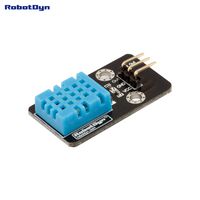
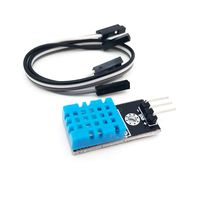
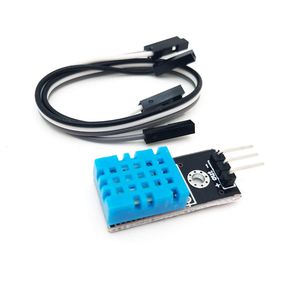
The DHT11 sensor can either be purchased as a sensor or as a module. Either way, the performance of the sensor is same. The sensor will come as a 4-pin package out of which only three pins will be used whereas the module will come with three pins as shown above.
The only difference between the sensor and module is that the module will have a filtering capacitor and pull-up resistor inbuilt, and for the sensor, you have to use them externally if required
Technical Specification
Operating Voltage: 3.3~5.5V DC
Operating current: 0.3mA (measuring) 60uA (standby)
Output: the single bus digital signal
Temperature Range: 0°C to 50°C
Humidity Range: 20% to 90%
The measurement accuracy of +&-5%RH humidity, temperature ±2°C
Resolution: 1%RH humidity, temperature 1 °C
Exchangeability: fully interchangeable
Long term stability: +&-1% RH per year
Operating specification
(1) Power and Pins
Power's voltage should be 3-5.5V DC. When power is supplied to sensor, don't send any instruction to the sensor within one second to pass unstable status. One capacitor valued 100nF can be added between VDD and GND for power filtering.
(2)Communication and signal Single-bus data is used for communication between MCU and DHT11.
Applications:
Measure temperature and humidity
Local Weather station
Automatic climate control
Environment monitoring
Noted:
If you want use these on Arduino, you'll need to install a DHT library (or use an IDE with one installed. Or write your own).
Make sure you have a very very very stable power supply, otherwise readings are off the charts
Don't buy these if you're looking for precision, but if you want something cheap and easy to set up then this isn't a bad choice.
The DHT11 sensor can either be purchased as a sensor or as a module. Either way, the performance of the sensor is same. The sensor will come as a 4-pin package out of which only three pins will be used whereas the module will come with three pins as shown above.
The only difference between the sensor and module is that the module will have a filtering capacitor and pull-up resistor inbuilt, and for the sensor, you have to use them externally if required
Technical Specification
Operating Voltage: 3.3~5.5V DC
Operating current: 0.3mA (measuring) 60uA (standby)
Output: the single bus digital signal
Temperature Range: 0°C to 50°C
Humidity Range: 20% to 90%
The measurement accuracy of +&-5%RH humidity, temperature ±2°C
Resolution: 1%RH humidity, temperature 1 °C
Exchangeability: fully interchangeable
Long term stability: +&-1% RH per year
Operating specification
(1) Power and Pins
Power's voltage should be 3-5.5V DC. When power is supplied to sensor, don't send any instruction to the sensor within one second to pass unstable status. One capacitor valued 100nF can be added between VDD and GND for power filtering.
(2)Communication and signal Single-bus data is used for communication between MCU and DHT11.
Applications:
Measure temperature and humidity
Local Weather station
Automatic climate control
Environment monitoring
Noted:
If you want use these on Arduino, you'll need to install a DHT library (or use an IDE with one installed. Or write your own).
Make sure you have a very very very stable power supply, otherwise readings are off the charts
Don't buy these if you're looking for precision, but if you want something cheap and easy to set up then this isn't a bad choice.
Ardest DHT11 Temperature and Humidity Sensor Module with Cable for Arduino Uno Raspberry Pi 2 3 3B RPi3 ESP-12E
Current Price
$8.99
Average
$8.99
Min Price
$8.99
Max Price
$8.99
Description
Difference between DHT11 Sensor and module:
The DHT11 sensor can either be purchased as a sensor or as a module. Either way, the performance of the sensor is same. The sensor will come as a 4-pin package out of which only three pins will be used whereas the module will come with three pins as shown above.
The only difference between the sensor and module is that the module will have a filtering capacitor and pull-up resistor inbuilt, and for the sensor, you have to use them externally if required
Technical Specification
Operating Voltage: 3.3~5.5V DC
Operating current: 0.3mA (measuring) 60uA (standby)
Output: the single bus digital signal
Temperature Range: 0°C to 50°C
Humidity Range: 20% to 90%
The measurement accuracy of +&-5%RH humidity, temperature ±2°C
Resolution: 1%RH humidity, temperature 1 °C
Exchangeability: fully interchangeable
Long term stability: +&-1% RH per year
Operating specification
(1) Power and Pins
Power's voltage should be 3-5.5V DC. When power is supplied to sensor, don't send any instruction to the sensor within one second to pass unstable status. One capacitor valued 100nF can be added between VDD and GND for power filtering.
(2)Communication and signal Single-bus data is used for communication between MCU and DHT11.
Applications:
Measure temperature and humidity
Local Weather station
Automatic climate control
Environment monitoring
Noted:
If you want use these on Arduino, you'll need to install a DHT library (or use an IDE with one installed. Or write your own).
Make sure you have a very very very stable power supply, otherwise readings are off the charts
Don't buy these if you're looking for precision, but if you want something cheap and easy to set up then this isn't a bad choice.
The DHT11 sensor can either be purchased as a sensor or as a module. Either way, the performance of the sensor is same. The sensor will come as a 4-pin package out of which only three pins will be used whereas the module will come with three pins as shown above.
The only difference between the sensor and module is that the module will have a filtering capacitor and pull-up resistor inbuilt, and for the sensor, you have to use them externally if required
Technical Specification
Operating Voltage: 3.3~5.5V DC
Operating current: 0.3mA (measuring) 60uA (standby)
Output: the single bus digital signal
Temperature Range: 0°C to 50°C
Humidity Range: 20% to 90%
The measurement accuracy of +&-5%RH humidity, temperature ±2°C
Resolution: 1%RH humidity, temperature 1 °C
Exchangeability: fully interchangeable
Long term stability: +&-1% RH per year
Operating specification
(1) Power and Pins
Power's voltage should be 3-5.5V DC. When power is supplied to sensor, don't send any instruction to the sensor within one second to pass unstable status. One capacitor valued 100nF can be added between VDD and GND for power filtering.
(2)Communication and signal Single-bus data is used for communication between MCU and DHT11.
Applications:
Measure temperature and humidity
Local Weather station
Automatic climate control
Environment monitoring
Noted:
If you want use these on Arduino, you'll need to install a DHT library (or use an IDE with one installed. Or write your own).
Make sure you have a very very very stable power supply, otherwise readings are off the charts
Don't buy these if you're looking for precision, but if you want something cheap and easy to set up then this isn't a bad choice.
Price will be lower
in next 2 weeks
in next 2 weeks
According to the data, price will be lower in next two weeks, so not waste your money and track better price!
Product review & video
now to set up a socket where we will use this dht11 module and I will take this dht11 module and put on a breadboard okay I can plug it into the breadboard it's very easy to connect to the breadboard and then we have to take three jumper wires I can take the first jumper wire so look at this look at this carefully this first one well going to connect to the ground so I will take jumper wire connect and then connect it to the ground pin on Westby point I hope you can see in my camera okay I have connected the ground pin then I need to take another jumper wire and it will go to the middle pin on the sensor module so this one is the middle paint data and that will going to connect to the GPIO pin 21 make sure it's close to this USB hub okay and then the only pin which is remains to connect is a VCC so we can take the leftmost pane rightmost pin sorry and we're going to connect to the first


Similar products