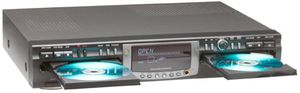
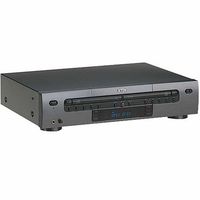
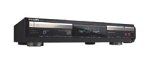
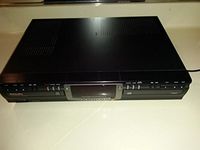
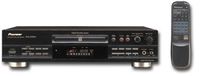
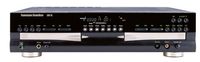
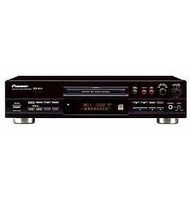
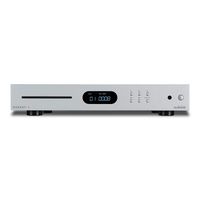
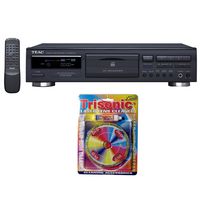
Philips' CDR775BK CD recorder smashes the $400 price point for dual-disc CD decks, bringing high-speed recording and hard-wired convenience to a new level of affordability. The deck works equally well as a recorder and as a player, thanks to its abundant hook-up options, though it doesn't muster the stellar quality from its analog outputs that you'll find in pricier CD recorders and players. (The digital outputs sound fine, however.)
The CDR775BK is equally happy receiving data from either of the two established means of digital audio transmission (optical or coaxial), and its analog inputs let you feed the recorder from external devices such as a cassette deck or a turntable--though a turntable must first be routed through a phono preamplifier, such as the phono input on a receiver.
Topping the list of cool playback features is the CDR775BK's DJ mode, which lets the two trays function independently; each "deck" offers a choice of analog or coaxial digital outputs. This means, taking the mode literally, that you can make yourself the life of a party by routing the deck's respective outputs into a DJ's mixer and letting fly with a new song just as the song from the other tray is fading out.
Alternately, you can route the outputs to separate amplifiers or receivers and enjoy simultaneous playback of different music in different rooms. Even cooler: you can program up to 99 tracks, switching between the two decks at will with no waiting during the switching (using analog or digital outputs).
You can also customize your CDs by recording at either normal or double speed from the player deck to the recorder deck. Double-speed recording can only take place during internal digital dubbing, however. CDs made from analog or external digital sources--or discs made from copies of digital recordings (see the accompanying FAQ for more details)--must be made at single speed.
All recording falls into one of five categories. In any category, the process is the same: